Film Camera Bag: Organization Guide for Analog Photographers
By Yuki Tanaka • 17th Oct

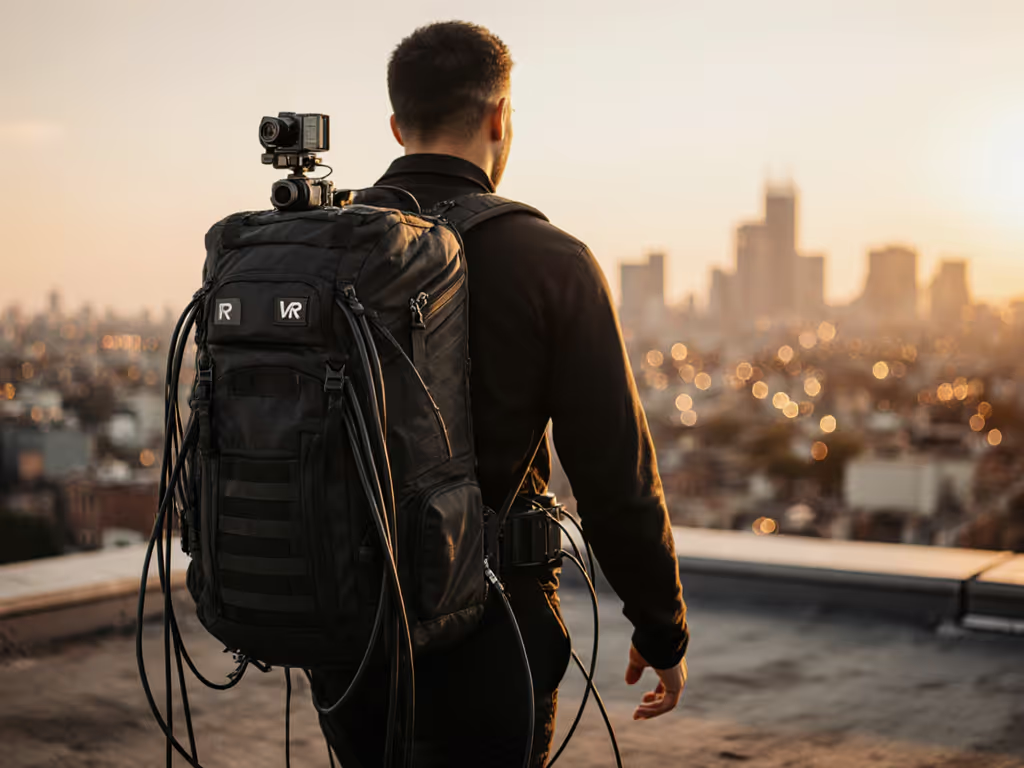
A well-organized camera film bag isn't just about protecting your gear, it's about creating a system that delivers your next frame before you need it. For analog shooters, where every shutter click costs real money and time, your photo camera bag must function as an extension of your workflow. Missed moments with film aren't recoverable like digital files, so your organization system needs to prevent hesitation. I've rebuilt my kit three times after watching a silent film roll die during a client shoot because I couldn't find my backup roll in time. That's why I now treat every camera film bag as a performance tool, not a storage container.
The Film Photographer's Unique Challenge
Digital photographers recover from mistakes; film shooters don't. Each frame requires physical preparation, and film's limited capacity means every shot counts. Your camera film bag must solve three critical problems digital bags don't face:
- Time-sensitive reloads: No chimping means you can't rush reloading when you hit frame 36
- Environmental vulnerability: Film degrades from heat, light, and radiation exposure during transit
- No second chances: You can't review and reshoot like with digital
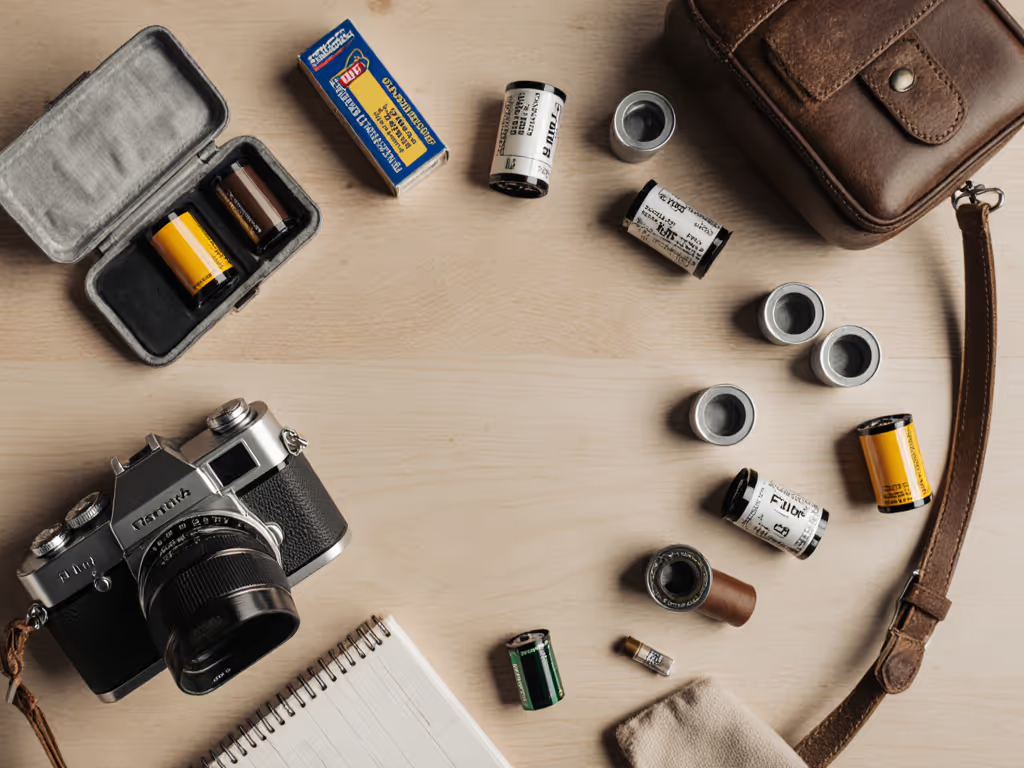
The stakes are higher, so your organization must be surgical. For a step-by-step walkthrough, see our 5-step organization guide. A poorly arranged photo camera bag becomes a liability when you're trying to reload in a crowded street or changing rolls between dramatic lighting shifts.
Build Your Task Zones
Forget "maximal organization", film requires task zones that match your shooting rhythm. My core principle: a bag's job is to make the next frame inevitable. During a corporate event, I lost a minute of live coverage because my film rolls were buried beneath cleaning supplies. Now I map compartments to specific actions:
Loading Zone
- Location: Top-right interior (dominant hand access)
- Holds: 2-3 pre-loaded film cassettes in opaque containers
- Key: Separate by ISO with colored tape tabs
- Check: Can you pull and load a new roll in under 15 seconds?
Processing Zone
- Location: Dedicated side pouch with light seal
- Holds: Unexposed film and exposed cassettes (separate compartments)
- Key: Never mix used and unused rolls
- Check: Can you transfer an exposed roll without light leak risk?
Emergency Zone
- Location: Zippered front panel
- Holds: Scissors, tape, backup cassettes, light-tight film changing bags
- Key: Critical for in-field film emergencies
- Check: Can you access without setting bag down?
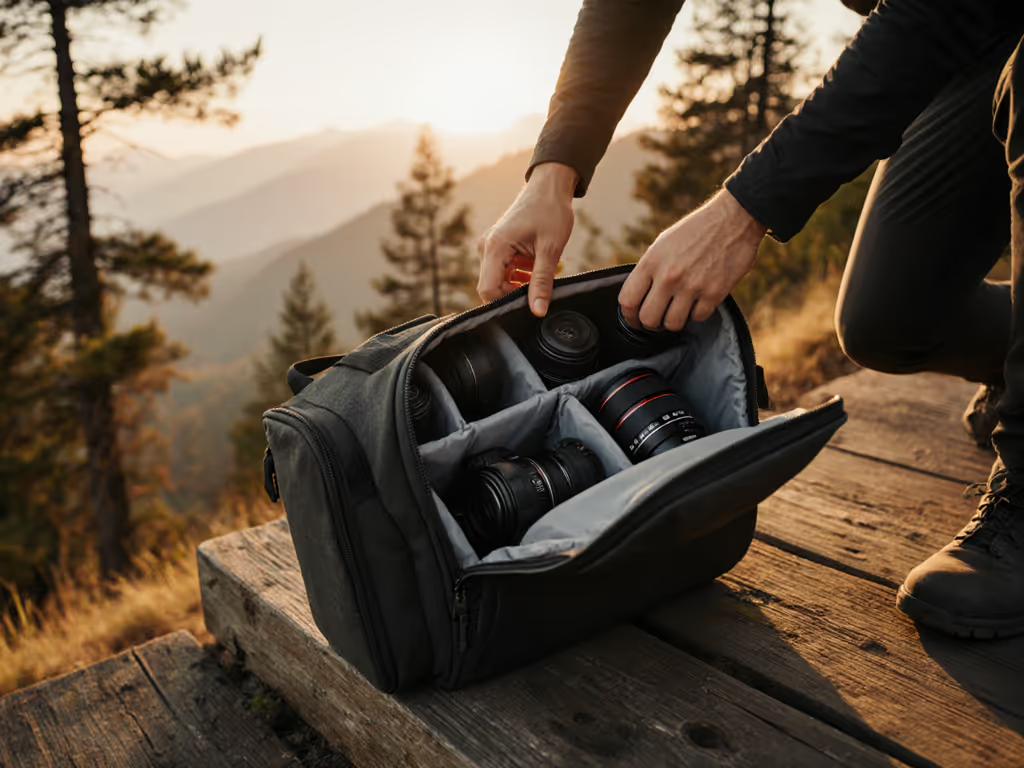
This zone approach shaves seconds during critical transitions. If you're still choosing a bag layout, compare modular vs fixed compartments to pick the structure that supports your workflow. Time-to-shot rules; everything else supports the next frame. When you're reloading in dim light, you shouldn't be thinking about where things are; you should be feeling for them.
Film Storage Solutions Checklist

Analog shooting demands precision in film storage solutions. Use this checklist before your next shoot:
Pre-Shoot Verification
- Film rolls stored in opaque containers (not original paper sleeves)
- Separate compartments for 100/400/800 ISO films
- Desiccant packs in film storage zones
- Temperature log if shooting in extreme environments
On-Location Management
- Exposed rolls immediately moved to light-sealed container
- Heat exposure tracked (max 1 hour in direct sun)
- Reloading performed standing (not on ground)
- Film changing bags accessible for mid-roll emergencies
Travel Protocol
- Film carried in cabin luggage (scanners degrade film)
- Hand-check request prepared for security
- Backup storage container for airport transit
- Film manifest documenting undeveloped rolls
This film photographer organization system reduces cognitive load when you're focused on composition. No more fumbling for film containers while the moment disappears. Remember that time-to-shot principle? Every second spent searching for gear is a second you're not making photographs.
Silent Operations for Street Shooting
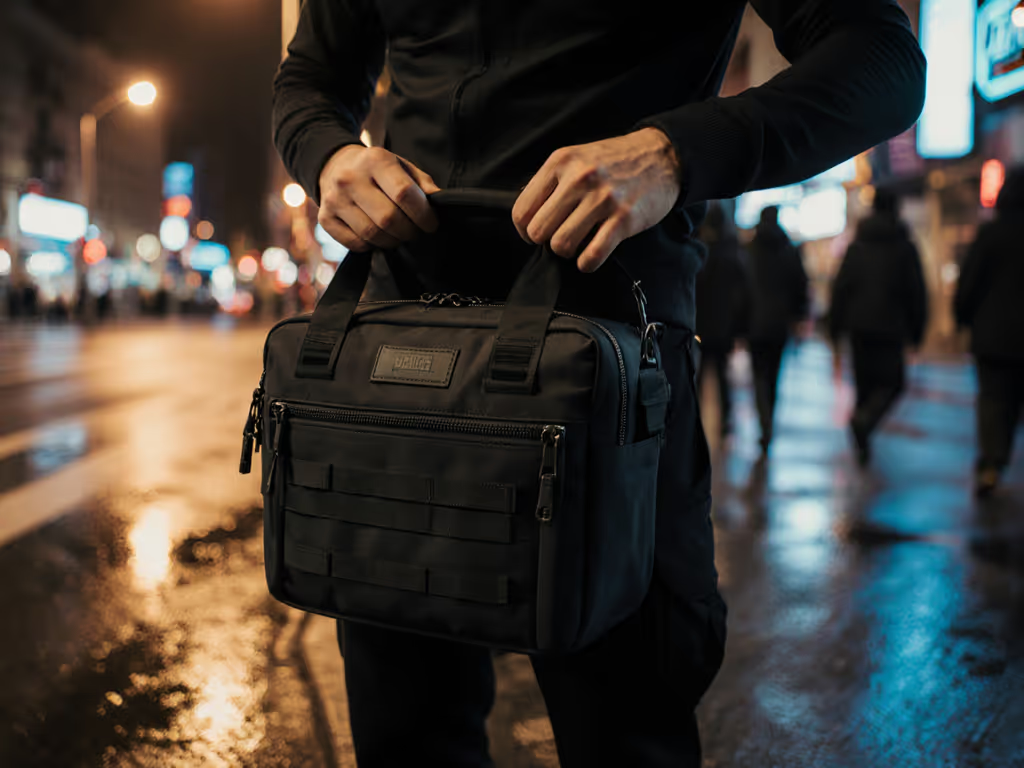
Film photographers frequently shoot in environments where bag noise ruins the moment. That zipper sound? It's the difference between capturing a candid smile and losing the shot. Your good camera bag must operate near-silently:
- Replace Velcro closures with magnetic snaps
- Use silicone lubricant on zippers to reduce screech
- Line compartments with felt to prevent gear rattling
- Store film cassettes in padded sleeves, not loose containers
During documentary work in Tokyo markets, I modified my bag's zipper pulls with leather tabs. The quieter operation meant subjects never noticed when I reloaded. In busy cities, pair silence with anti-theft features to cut risk without slowing access. Film storage solutions only work when they're invisible to your subjects.
Travel Optimization for Film Shooters
Your best camera bag for travel serves dual purposes: protecting gear while moving through transit chaos AND functioning when you arrive. Film shooters have unique travel constraints: For airport rules, hand-check scripts, and scanner safety, use our airline camera bag checklist.
- Airport security: Film above ISO 800 gets damaged in scanners
- Climate shifts: Humidity affects film emulsion
- Time limits: You can't review shots to adjust settings mid-trip
Pack your photo camera bag like this:
- Top compartment: Daily shooting kit (body + 2 lenses + 4 rolls)
- Middle section: Film storage in temperature-stable containers
- Bottom zone: Cleaning supplies and emergency reload kits
- External pockets: Documents, snacks, silent-operation tools
Before boarding:
- Request hand-check for all film
- Keep film manifest in your passport holder
- Store high-ISO film in lead-lined bags (for radiation protection)
This system turns airport stress into a predictable workflow. If rain or humidity is likely, compare weather-resistant camera bags based on real rain tests before you pack. Film photographers who don't prepare for security lines arrive at destinations with degraded or ruined film stock.
Your Action Plan
Time-to-shot rules; everything else supports the next frame.
Your film camera bag organization isn't complete until you can execute this test:
- Set timer
- Simulate a mid-roll reload in dim light
- Switch film canister
- Return to shooting position
If it takes more than 20 seconds, your camera film bag needs reorganization. Missed moments with film are permanent; they can't be recovered in post. Revise your compartments until reloading becomes muscle memory, not a conscious effort.
Start today: Take everything out of your bag. Lay out your shooting sequence. Build task zones that match your rhythm, not magazine advertisements. Then run the reload test. Adjust until silence and speed become automatic. Your next roll of film depends on it.
When your organization disappears into your workflow, that's when you become truly present with your subject. And that's what film photography is about.
Related Articles