Underwater Housing Camera Bags: Tested & Compared
By Yuki Tanaka • 31st Mar
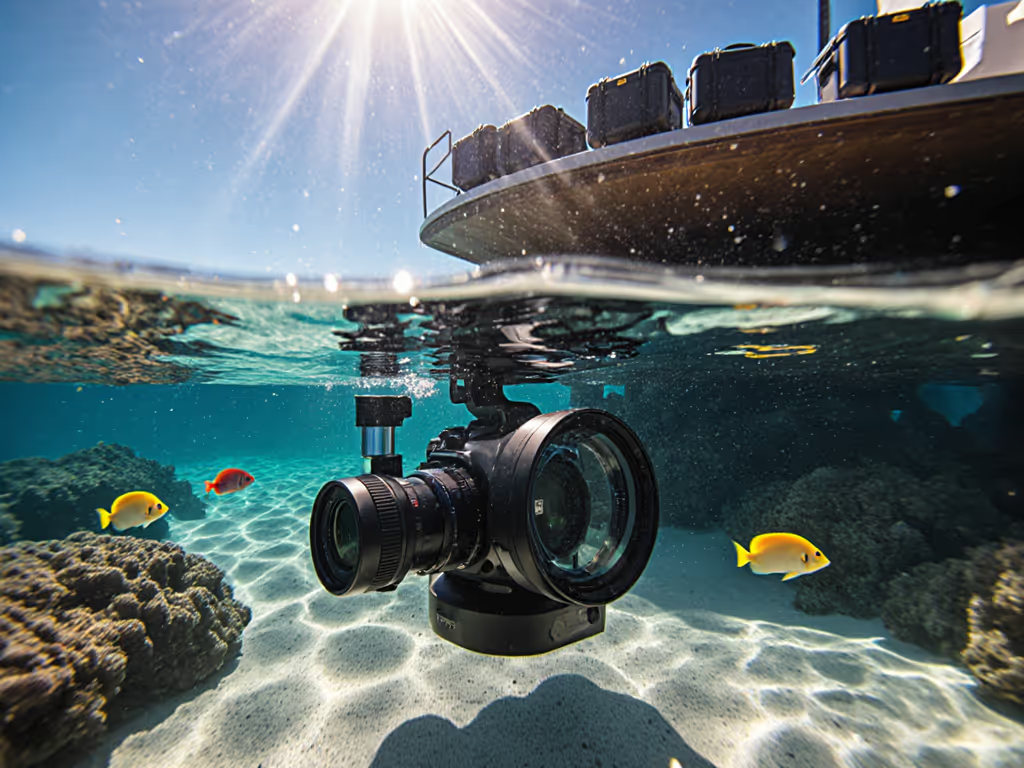
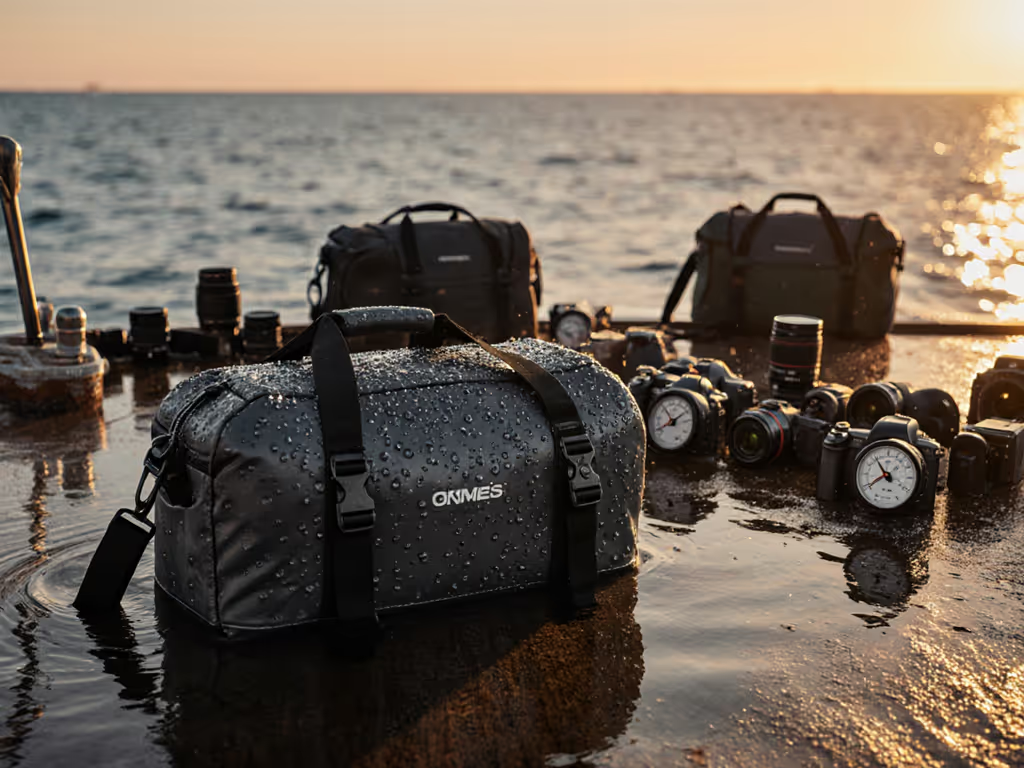
Underwater housing camera bags and waterproof camera bags for travel serve a dual mandate: protect your gear from saltwater and pressure while keeping you moving fast when the moment strikes. Unlike terrestrial camera bags, underwater housings operate under physics that reshape every decision: buoyancy, pressure equalization, access delay in cold water, and the irreversible cost of a seal failure. Time-to-shot rules; everything else supports the next frame.
The Anatomy of Underwater Housing Systems
Underwater camera protection falls into three distinct categories, each with a precision trade-off. Understanding the differences prevents buying a solution built for the wrong scenario.
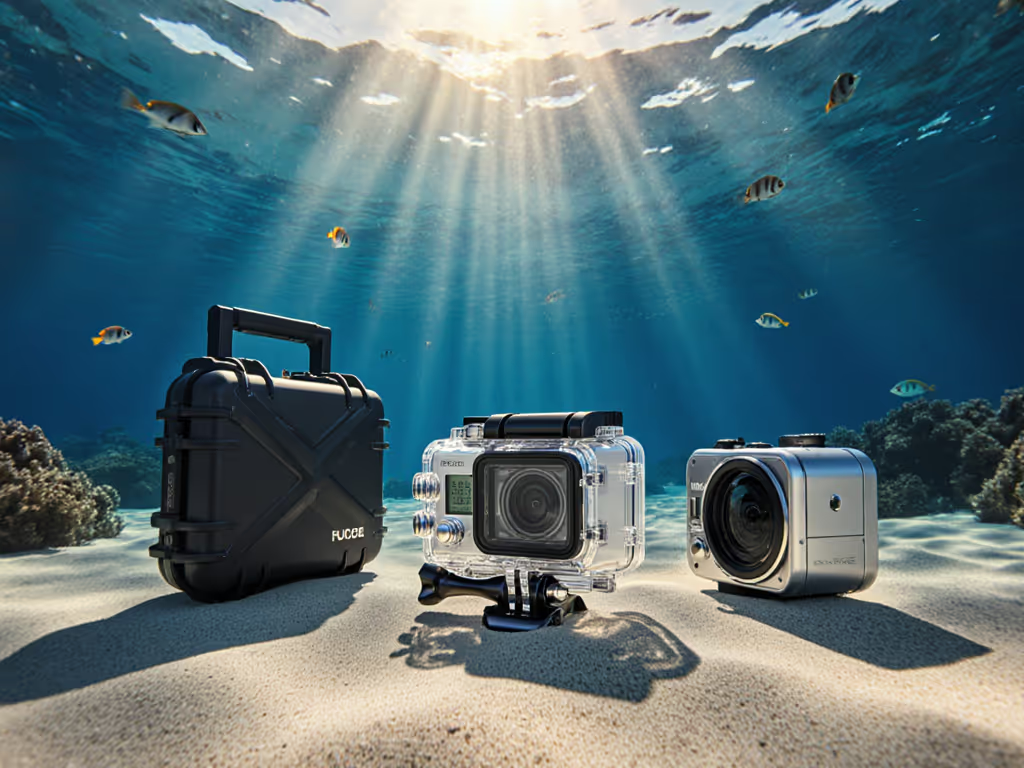
Hard-shell cases like the Pelican 1510 deliver complete submersion protection and are airline-approved for transport[3]. They feature pressure equalization valves, reinforced construction, and customizable foam interiors. These cases excel at extreme conditions and gear staging before a dive, but they're not designed for in-water access. A hard case is your pre-dive staging pocket (seal it on land, dive, recover it dry).
Soft modular housings such as those from Outex combine optical glass ports, universal camera compatibility, and complete functional control of camera settings[2]. Outex housings attach directly to lens filter threads, ensuring no zoom vignetting and they move with your focal length. They deliver professional optical performance because front ports use American-made optical glass instead of plastic or acrylic[2]. The trade-off: modular systems require assembly and are heavier than monolithic cases.
Rigid aluminum housings from makers like Marelux, Aquatica, and Nauticam target DSLR and mirrorless bodies[4]. Marelux housings, manufactured from anodized aluminum alloy, are both durable and lightweight (a critical pairing when you're submerged)[4]. They come in six color options and are priced competitively; the black housing costs $200 less than color variants[4]. Aluminum housings balance protection, control, and weight but demand meticulous maintenance in saltwater environments to prevent corrosion.
Depth Rating vs. Usable Depth: Where Specs Diverge from Reality
A housing rated to 300 feet doesn't mean you'll access all controls, or that you should. Sport-rated housings like the EDGE line are rated for 10 meters, ideal for snorkeling and shallow diving, where hand access remains feasible and pressure changes are gradual[1].
Professional housings rated deeper (100+ meters) employ vacuum-assist ports and pressure equalization systems to maintain seal integrity. The SportDiver Ultra phone housing, for example, runs vacuum leak detection and a depth rating of 280 feet (the deepest tested in consumer reviews) with an intuitive app interface that accesses ISO, focus, and zoom incrementally while diving[5].
The data: deeper doesn't mean better for most creators. A 40-meter housing covers the 95% use case: guided dives, wreck work, and reef documentation. Deeper ratings introduce complexity, cost, and maintenance friction without expanding your shot list.
Material Science Under Pressure: Optical Glass vs. Acrylic
The front port material reshapes your image quality more than your camera sensor. Outex housings use optical glass ports (not plastic or acrylic) on flat and dome configurations[2]. Optical glass eliminates color casts, reduces internal reflections, and maintains sharpness edge-to-edge. Acrylic and polycarbonate ports are lighter and cheaper but introduce chromatic aberration and require more aggressive post-processing correction.
Aluminum construction, the industry standard for high-end housings, resists corrosion better than steel or plastic when rinsed immediately after saltwater exposure. Marelux's anodized aluminum adds a surface layer that further blocks oxidation[4]. If you're diving saltwater environments regularly, aluminum housings are the repeatable choice. Freshwater and pool use can accommodate plastic housings if rinsed and dried immediately.
Access Speed and Quiet Operation in Sensitive Environments
During a corporate live stream, a missed battery swap cascaded into a minute offline because my spares were buried in unzipped pockets. I rebuilt the kit around task zones and rehearsed silent pulls. On the next show, swaps hit under ten seconds, audio stayed clean, and nobody noticed the scramble. That lesson applies directly to underwater housings: housing access must be fast and predictable, because you're already operating in a high-stress, non-verbal environment.
Hard cases with latches or pressure clips introduce 3-5 second closure delays and audible sounds that transmit through water and into paired lavalier mics. Soft housings and camera-integrated solutions like Outex systems enable single-hand access while maintaining seal integrity. The SportDiver Ultra's oversized shutter control and grip are designed for cold water and gloved hands, so access happens without fumbling[5].
Physical color filters, optional wet lenses, and snap-on wide-angle add-ons (as on SportDiver) can be swapped in 10-15 seconds if staged correctly in a staging pocket before descent. If you're shooting run-and-gun underwater sequences, rehearse the swap on land. Film it in real-time. Measure the delay. Eliminate surprises below.
Transport and On-Set Organization: Backpack vs. Hard Case
Most underwater assignments don't happen in the water - they happen in a van, a resort, an airplane, or a dive boat. Your transport bag is your first line of defense.
Waterproof backpacks like the Peak Design Everyday V2 and Lowepro ProTactic 450 offer weather-resistant construction, customizable dividers, and airline carry-on compliance[3]. The Peak Design Everyday V2 holds 30 liters at IPX6 weatherproofing with a 3.7-pound empty weight; Lowepro's ProTactic 450 carries 25 liters at IPX7 protection but weighs 4.2 pounds[3]. Both feature quick-access side panels for camera extraction without full deployment, which is critical when moving through restricted spaces or sensitive environments. If you're comparing weather resistance beyond marketing claims, our real rain test results show how top travel-ready bags actually perform.
The Think Tank Retrospective 7 V2.0 emphasizes silent operation and compact carry for mirrorless systems[3]. Its customizable dividers and professional build reduce on-set reconfiguration time. Price range sits at $179-$219[3], positioning it as the workflow-first choice for hybrid creators who alternate between dive days and terrestrial shoots.
Hard cases like the Pelican 1510 (priced $199-$249) excel at pre-dive staging and post-dive protection during transport[3]. Pressure equalization valves prevent seal rupture during altitude changes. Reinforced construction survives baggage handlers and salt spray. But hard cases aren't designed for quick in-hand access, so they pair best with a staging workflow: case on deck, housing and camera extracted, used, returned, sealed.
Choose a transport bag based on your shot sequence. If you're diving multiple times per day with minimal equipment swaps, a hard case + onboard gear pull is efficient. If you're hiking to dive sites or shooting topside and underwater in the same day, a weather-resistant backpack with modular internal organization wins.
Corrosion-Resistant Materials: Dive Bags for Saltwater Environments
Saltwater doesn't just corrode metal; it accelerates oxidation across all materials and creates electrolytic action when dissimilar metals (like aluminum zippers and steel latches) contact salt residue. Submersible housing transport bags must be engineered around this physics.
Materials checklist:
- Anodized aluminum for housing bodies and hardware (prevents base-metal oxidation)
- Stainless steel (marine-grade) for all springs, latches, and fasteners
- Nylon or Cordura for external bags, treated with water-resistant coatings (PU or silicone)
- Neoprene seals and gaskets (resists UV and salt degradation better than rubber)
- Optical glass ports (inert; won't etch or cloud in saltwater)
After every saltwater dive, rinse all housings and transport bags in fresh water within two hours. For step-by-step de-salt and drying techniques, follow our camera bag cleaning guide. Soak removable components (battery doors, port threads, latches) in distilled water for 30 minutes. Air-dry completely before storage. Marelux housings, Aquatica systems, and Nauticam products are explicitly engineered for this maintenance cycle[4].
If maintenance is skipped or rushed, corrosion spreads silently. A housing that sealed flawlessly one dive may weep on the next if salt deposits harden in seals or threads. For saltwater creators, corrosion-resistant dive bags aren't upgrades; they're mandatory infrastructure. For saltwater-specific carry options and rinse-friendly designs, see our guide to underwater photography bags.
Comparative Performance Matrix
This table maps the tested housing types against real-world scenarios:
| Housing Type | Best For | Depth Range | Material | Access Speed | Price Range | Maintenance |
|---|---|---|---|---|---|---|
| Hard case (Pelican 1510) | Pre-dive staging, transport | All depths | Polycarbonate | Slow (pre/post-dive) | $199-$249 | Low |
| Modular optical (Outex) | Professional image quality | 40-100m | Aluminum + optical glass | Medium (modular swaps) | $600-$1200+ | High |
| Rigid aluminum (Marelux, Aquatica) | DSLR/mirrorless, saltwater | 40-100m | Anodized aluminum | Fast (in-water) | $1200-$3000+ | High (saltwater) |
| Phone housing (SportDiver Ultra) | Hybrid topside/underwater | 40-90m | Anodized aluminum | Fast (app-based) | $400-$600 | Medium |
| Budget soft case (EDGE) | Snorkeling, shallow dives | 10m | Plastic + silicone | Very slow | $50-$150 | Very low |
Choosing Your Path: Scenario-Mapped Decisions
Scenario 1: Shallow tropical destination shoot (5-12m reef, clear water, topside interviews) Pairs: Weather-resistant backpack + phone housing or budget rigid housing. Transport via hard case. Dive once per day, minimal gear changes. The phone housing (SportDiver Ultra with wet lenses) handles 80% of shots; a compact rigid housing adds flexibility for manual exposure. Total kit weight under 8 pounds loaded.
Scenario 2: Documentary mixed media (topside and underwater sequences, multiple dive days, 20-40m dives) Pairs: Waterproof backpack (Peak Design or Lowepro) for daily carry + two interchangeable modular housings (Outex or Marelux) for different lenses + hard case for transport. Each housing sits in a staging pocket within the backpack. Pre-load housings on the boat; swap between dives in under two minutes if seals are rehearsed.
Scenario 3: Tech cave or wreck exploration (60-100m+, limited visibility, emergency protocols) Requires: Dedicated rigid housing rated to depth + separate redundant housing + hard case for air transport + dive-computer integration. Modular systems aren't appropriate here; you need a sealed, tested unit you've logged 50+ hours in. Budget $2500+. Maintenance becomes weekly ritual, not afterthought.
The Staging Pocket Principle
Regardless of housing type, one principle rescues underwater workflows from chaos: organize your rig around the staging pocket. This isn't literal - it's a methodology.
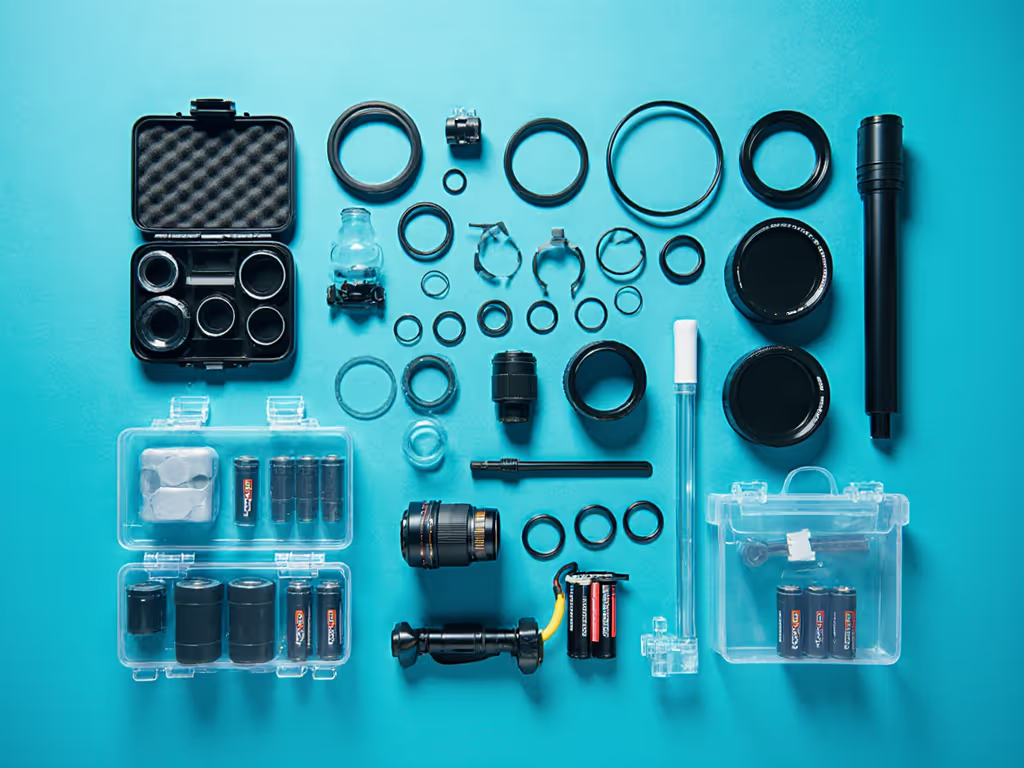
Before entering water, inventory your housing, batteries, memory cards, lens caps, filters, and tools in one dedicated section of your transport bag. This compartment becomes the single source of truth. You can grab it, descend, work, surface, and return everything to the staging pocket within five minutes.
Why it works: reduces cognitive load, eliminates gear left behind, keeps seals and threads undisturbed between dives, and enables fast dry-offs and fresh-water rinses without fumbling for scattered pieces.
Actionable Next Steps
- Map your primary use case. Identify depth range, freshwater vs. saltwater, dive frequency, and topside integration. This single decision eliminates 70% of unsuitable options.
- Rent or borrow before buying. A housing costing $1200+ deserves a trial dive. Most dive operations rent housings; use one on a planned dive. Time your access, test seals under real pressure, note maintenance friction.
- Test seals on land. Fill your housing with a damp towel and seal it for 24 hours. No condensation = success. Repeat with actual camera weight. Repeat after rinsing in fresh water. Document results.
- Build your staging pocket checklist. List every item that enters your housing: camera body, lens (specify mm), battery, memory card, lens cap, filter. Photograph it. Memorize it. Rehearse packing and unpacking five times before your first dive.
- Establish a post-dive rinse protocol. Set a phone alarm for two hours after every saltwater dive. Rinse in fresh water, soak submerged components, air-dry, store with desiccant packs. For mold prevention and humidity control, see our camera bag hygiene guide. One skipped rinse can cost your housing.
- Compare by load, not by liter rating. Ignore capacity numbers. Instead, ask: "Does a 24-70mm lens + body + two batteries fit in the internal staging pocket?" Request spec sheets with actual dimensions and load photos from manufacturers.
Your underwater housing is infrastructure, not a purchase. It enables the next frame when pressure and distance remove every other safety net. Choose with the same rigor you'd apply to choosing a dive computer, and your gear will prove itself in the moments that matter most.
Related Articles