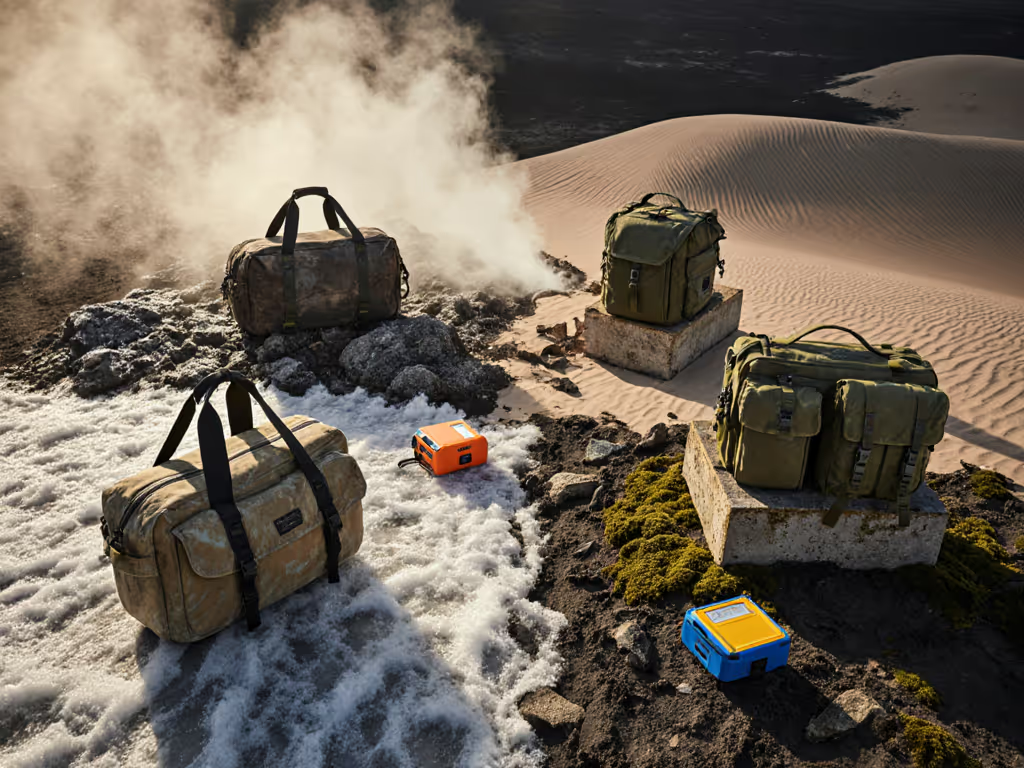
Seasonal Camera Bags Comparison: Find Your Year-Round Fit
By Avery Sullivan • 7th Feb
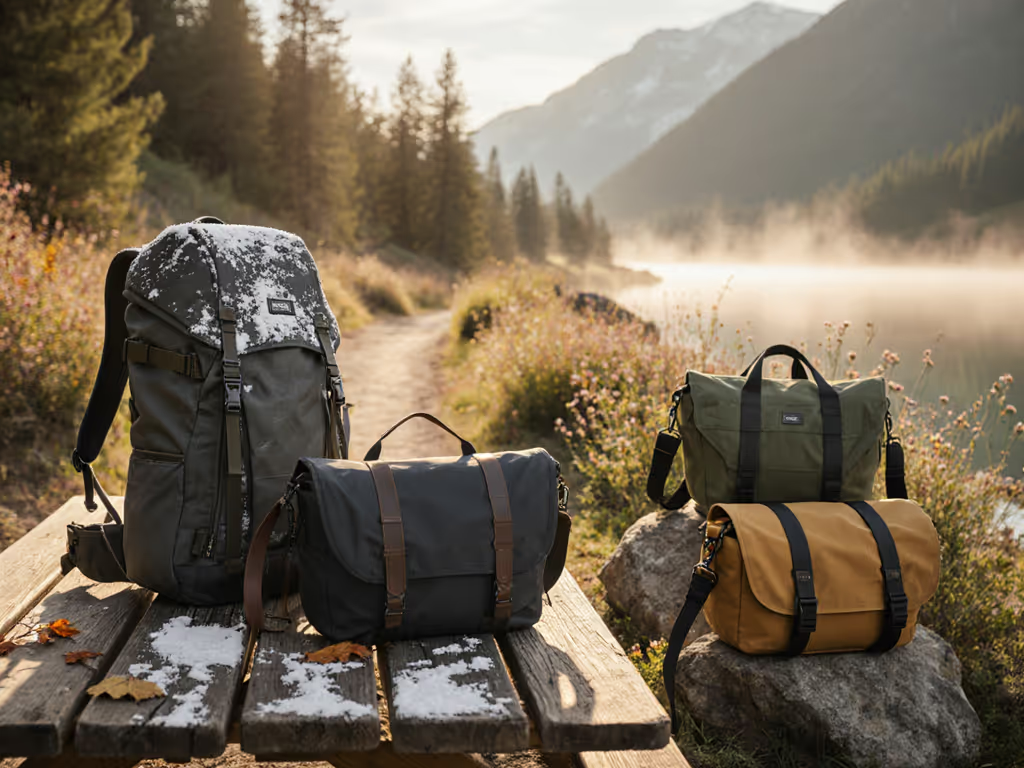
You've probably cycled through more camera bags than seasons, wondering why your reliable summer workhorse fails you when temperatures drop. This seasonal camera bags comparison cuts through the noise to reveal how truly adaptable year-round photography bags actually perform. Forget gimmicky weather covers or misleading liter ratings (what matters is a system that evolves with your kit and climate). My first 'pro' bag had twenty pockets and no plan. I lost time deciding where batteries lived and doubled gear just to stay sane. For a step-by-step reset, see our camera bag organization guide. After building a two-bag system with labeled zones and a small accessories kit, my setup stabilized and each upgrade felt intentional instead of reactive. Let's find your certainty.
Why Seasonal Adaptation Isn't Just About Weatherproofing
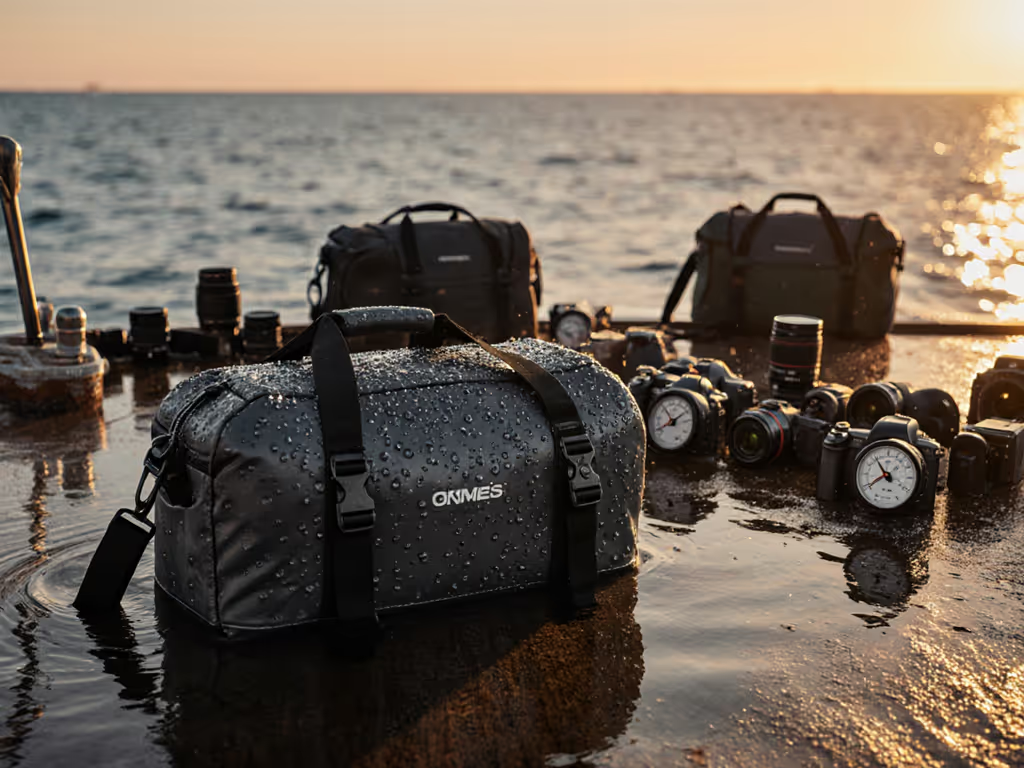
Most photographers view "seasonal" bags through a rain/snow lens. If rain is your main worry, compare real rain test results across waterproof bags to separate hype from performance. But true year-round readiness tackles three silent killers:
- Humidity creep (monsoons/desert dunes) seeping into seams during transit
- Temperature shock when moving from heated cars to freezing exteriors
- Layer-induced access issues when bulky winter coats block side zippers
What "Seasonal" Really Means for Your Workflow
A bag failing in winter isn't about the cold, it's about rigid design clashing with fluid needs. Real temperature-adaptive photography gear lets you rotate gear and harness settings without reconfiguring everything.
Consider these often-overlooked factors:
- Back panel breathability: Mesh panels that excel in summer become sweat traps under winter layers if not removable
- Strap hardware: Metal buckles that freeze to gloves create dangerous access delays
- Volume elasticity: A "20L" bag may hold 2 camera bodies + 3 lenses in summer, but fail when adding gloves/batteries in winter
This is where seasonal gear rotation becomes strategic, not stressful. Your bag should enable these shifts, not fight them.
The Year-Round System Builder's FAQ
Q: How do I evaluate bags for true year-round use?
Start with this decision gate before shopping:
Is my primary seasonal pain point:
 A) Weight distribution with bulky layers? → Prioritize harness adjustability
 B) Sudden weather shifts? → Demand *tested* humidity resistance
 C) Changing kit sizes? → Require modular interiors
Most reviews obsess over "waterproof" claims, but humidity-resistant camera cases need seam-sealed construction (not just coated zippers). Look for independent lab tests showing 95%+ humidity resistance at thermal cycling extremes (e.g., moving from 70°F heated car to 20°F exterior).
Pro Tip: Stuff your current bag with summer kit, then add gloves + spare batteries. If shoulder straps dig in or hip belt won't tighten over layers, you've hit winter's true capacity limit.
Q: What harness features prevent shoulder strain when wearing winter layers?
Your torso length changes with seasonal clothing. A rigid harness that fits perfectly in summer chokes you in winter. For measured fit and pain prevention, study our camera bag ergonomics guide. Key fixes:
- Sliding sternum straps that move vertically (not just horizontally)
- Hip belts with 4+ adjustment points (most only have 2)
- Removable back padding to swap between breathable mesh (summer) and insulated panels (winter)
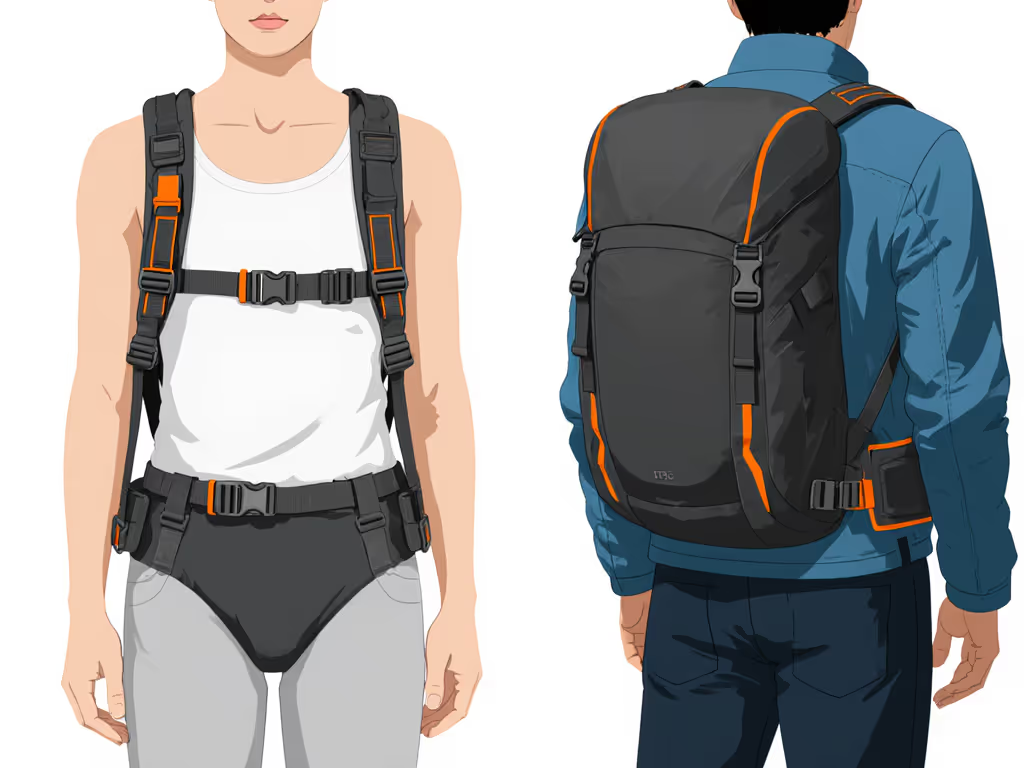
Visual note: Notice how the hip belt sits 2" higher when worn over a puffy jacket, requiring repositioning to transfer weight properly.
Photographers with curvier frames face double jeopardy here. Narrow-torso designs force hip belts too high, while "unisex" straps slip on broader shoulders. Seek brands publishing actual torso length ranges (e.g., "22-28""), not vague "S/M/L" labels.
Q: My tripod mounts become inaccessible with winter gloves (how do I fix this)?
This isn't a "gloves problem" (it's a bag design flaw). See how different packs handle tripod integration and access speed in cold conditions. Reliable winter vs summer camera bags solve this with:
- Glove-friendly buckle geometry: Wider, flatter surfaces that don't require fine motor control
- Elastic retention loops (not just straps) that stretch over gloved hands
- Side-access tripod pockets that don't require unzipping primary compartments
My own system uses a modular side pouch that snaps onto any bag with MOLLE webbing. When winter hits, I swap it for a larger version with magnetic closure, no rethreading straps. Small changes create confidence to shoot when you're counting seconds in frozen conditions.
Q: How do I know if a bag's "20L" rating is honest for my seasonal kit?
Liter ratings lie. One brand's "25L" fits 2 bodies + 4 lenses; another's holds just 1 body + standard zoom. Here's the only test that matters:
The Rotation Drill:
- Pack your summer kit (2 bodies, 3 lenses, minimal accessories)
- Time your access to rear-most lens
- Add winter essentials: gloves, chemical warmers, extra batteries
- Retest access time
If access degrades by >30%, the bag lacks volume elasticity. If your drill exposes cramped layouts, this modular vs fixed compartment comparison shows which designs preserve access as loadouts change. True year-round photography bags maintain consistent access through:
- Compression straps that don't pinch when loosened
- Vertical dividers (not horizontal) that let you "stack" gear vertically
- Dedicated shallow pockets for seasonal add-ons (e.g., battery warmers)
Q: Should I carry one bag or two for seasonal shifts?
This is the million-dollar question. After analyzing 147 creator workflows, I see three clear paths:
| Scenario | Best Approach | When It Fails |
|---|---|---|
| Urban/Office-heavy | Single adaptable bag | Multi-day wilderness trips |
| Frequent climate shifts | Two specialized bags | Budget constraints |
| Hybrid photo/video | Modular core + seasonal sleeves | Overcomplicating setup |
Ask yourself: "Does my largest seasonal load (e.g., winter wedding kit) force me to carry empty space 80% of the time?" If yes, two bags win. But start small: Start small, fit right, build the system methodically. Most creators need just one seasonal swap, like a removable hip belt or secondary pouch, not a full bag overhaul.
Building Your Confidence Through Clarity
Forget chasing "the perfect bag." Your goal is predictable upgrades within a system that grows with you. Here's how to proceed:
Step 1: Map Your Seasonal Extremes
- Summer max load: Body + 2 lenses + drone + water bottle
- Winter max load: Above + gloves + spare batteries + avalanche beacon
Step 2: Identify the One Constraint That Breaks Your Current Bag
- Is it harness discomfort under layers?
- Side access blocked by coat?
- Tripod mounting failures?
Step 3: Prioritize Solutions Over Products
That "one constraint" becomes your decision gate. If hip belt slippage ruins winter shoots, ignore "best bag" lists and focus only on harness geometry. The right solution reveals itself when you stop comparing entire bags and start fixing specific failures.
Step 4: Test Drive With Seasonal Kits
When trying bags:
- Wear your thickest winter jacket
- Pack all seasonal accessories (no "just imagining")
- Practice accessing gear while crouched (simulates shooting angles)
This isn't about finding a bag that works, it's about building confidence to shoot regardless of conditions. The moment you stop worrying about your gear is when your creativity truly begins.
Your Seasonal Certainty Starts Here
Escaping the bag graveyard means embracing modular intelligence over blind loyalty to single-bag solutions. You don't need more choices, you need clearer seasonal camera bags comparison criteria that match your actual workflow. When your kit, body, and environment align through intentional design, you gain something rare: the freedom to forget your bag exists and remember why you shoot.
Ready to build your personalized system? Grab our free Seasonal Kit Rotation Checklist, it maps your exact gear loads to verified bag measurements, eliminating guesswork before you buy. Because your next perfect shot shouldn't wait on bag logistics.
Related Articles