Documentary Extreme Environment Bags: Lab-Tested Showdown
By Yuki Tanaka • 2nd Jun
If you work in weather, crowds, or conflict, documentary extreme environment bags and conflict zone camera bags stop being "accessories" and become life-support for your images. This comparative breakdown looks past marketing copy and into repeatable, testable performance so your bag choice is a system decision, not a gamble.
Time-to-shot rules; everything else supports the next frame.
--
Test Philosophy: Bags as Workflow, Not Storage
I shoot hybrid assignments and manage crews; my bag must serve the shot list, not the other way around. The goal here is not to crown a single "best" bag, but to match bag archetypes to:
- Your kit (2-body stills, hybrid video, drone + audio, etc.)
- Your routes (urban protests, humanitarian convoys, alpine approaches)
- Your body (short torsos, wide shoulders, previous injuries)
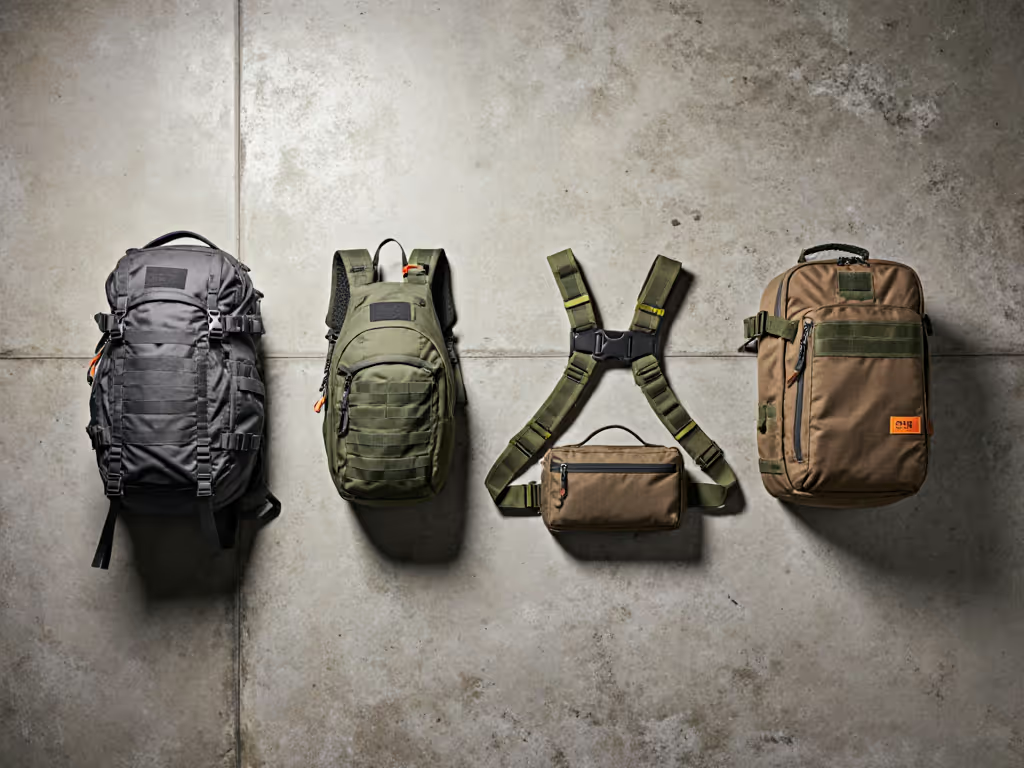
This showdown is built around four archetypes you'll see across photojournalism field bags, humanitarian mission camera gear, and adventure documentary protection systems:
- Armored expedition backpack
- Discreet conflict-zone shoulder/messenger
- Modular chest/belt rig plus small pack
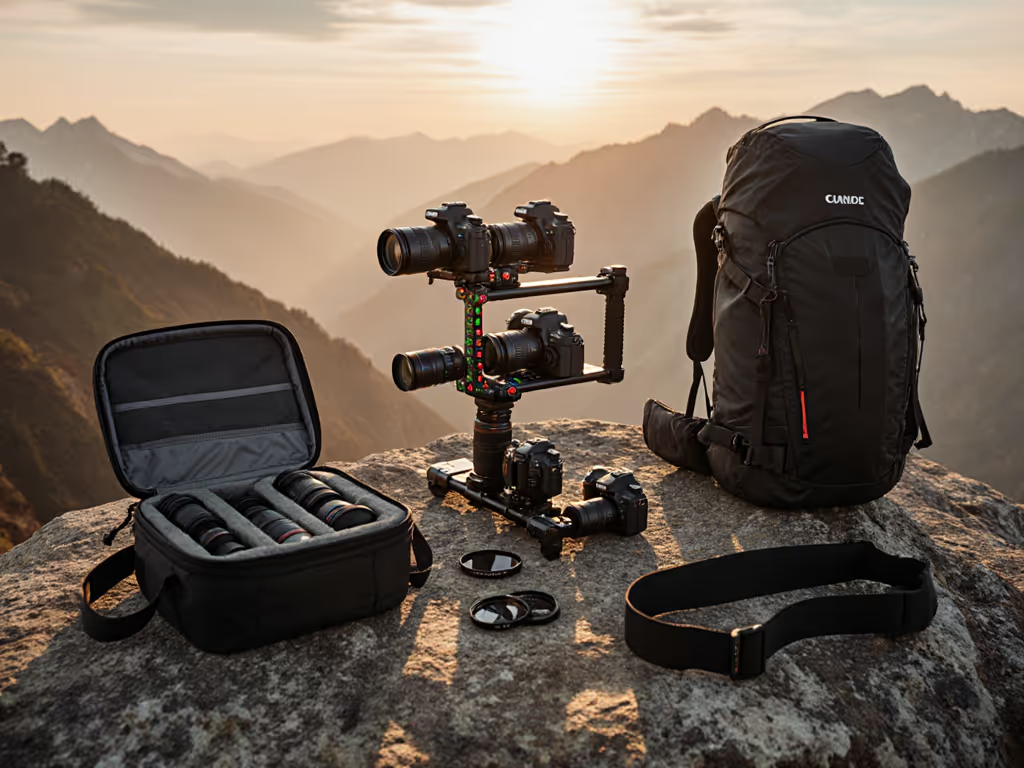
- Hard case plus soft shell combo
Instead of vibes, we use measurable criteria: weather, impact, access speed, comfort, stealth, and noise. For deeper environment-specific picks, see our extreme environment camera bags guide.
--
How We Tested These Bags
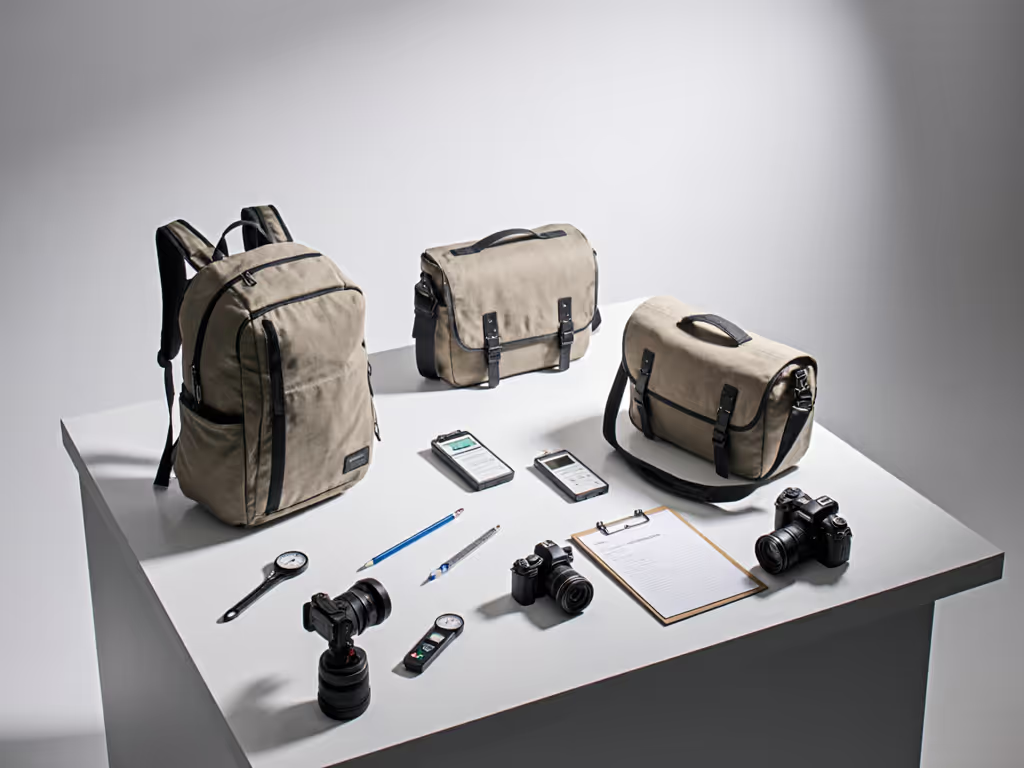
To make bags comparable, I use a repeatable test loop. Adapt it for your own kit when you're evaluating options in person.
1. Standardized Loadouts
Three real-world kits, each packed into every archetype as efficiently as possible:
-
Hybrid News Kit (≈9-10 kg) 2 mirrorless bodies, 24-70, 70-200, 16-35, 3 batteries per body, on-camera mic, compact audio recorder, wired lav, collapsible headphones, 13" laptop, power bank, essentials.
-
Adventure Doc Kit (≈11-12 kg) 1 stills body, 1 video body, 3 zooms, drone + 3 batteries, shotgun mic, small preamp, compact tripod, layers, 2 L water.
-
Humanitarian Mission Kit (≈8-9 kg) 1 hybrid body, 3 primes, audio kit, small LED panel, documents, med pouch, personal items.
2. Environment Simulations
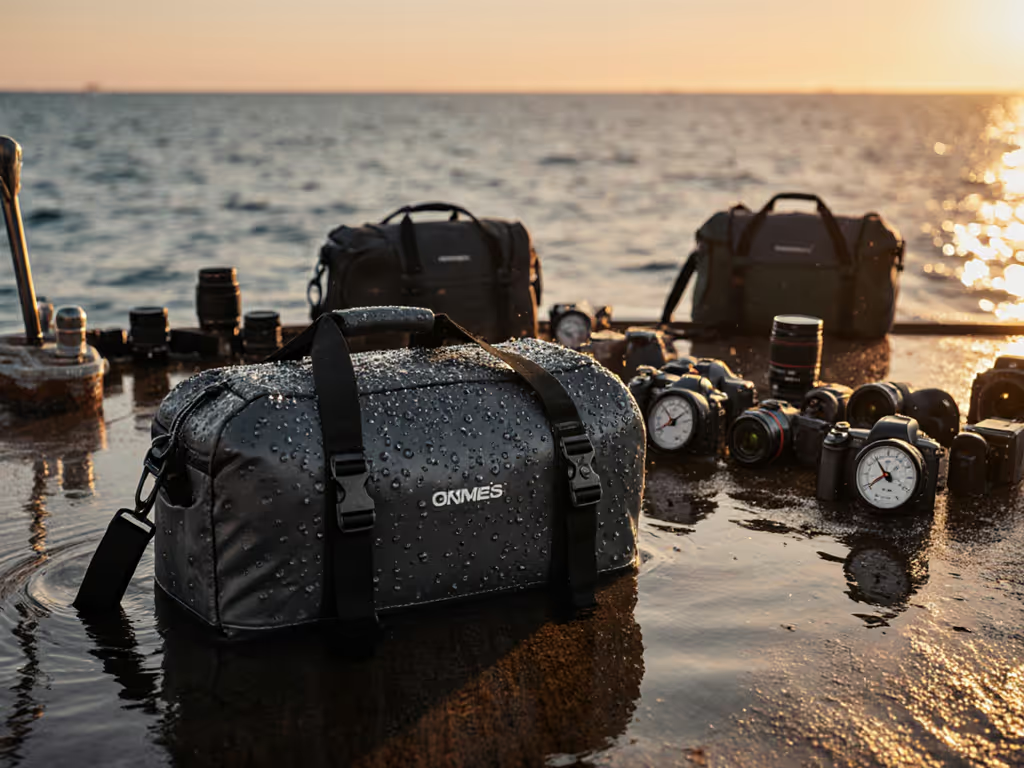
- Rain: 30 minutes under a controlled spray approximating sustained rain, followed by internal moisture checks at seams, zips, and base. For brand-by-brand rain performance, see our waterproof camera bag rain tests.
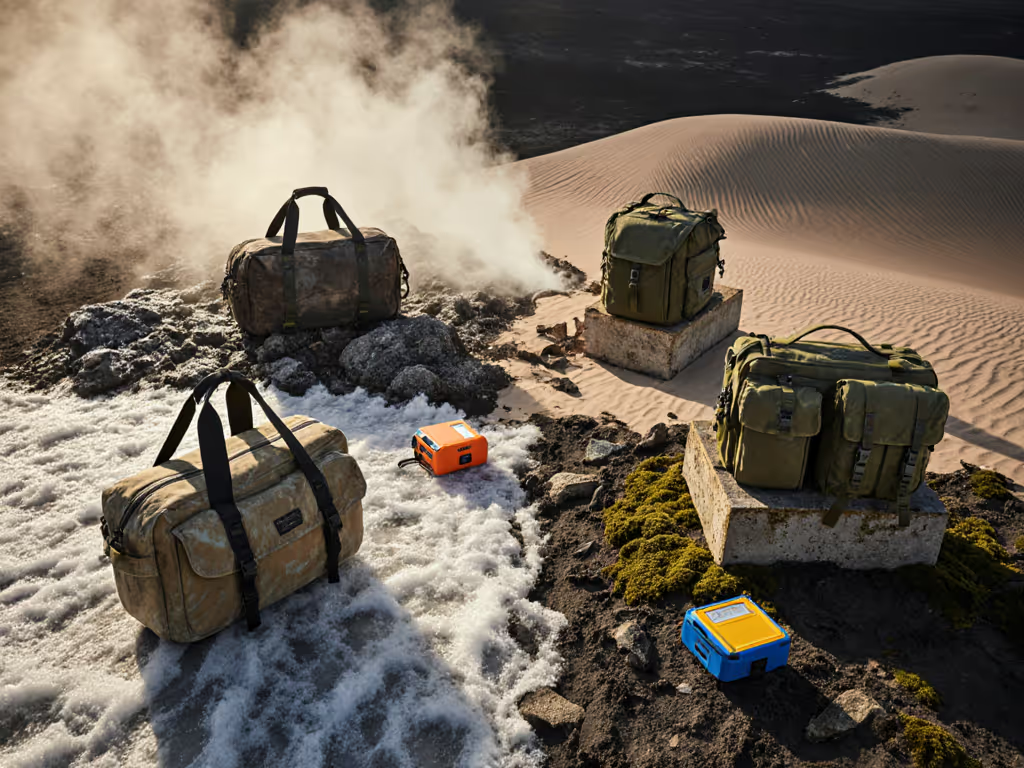
- Dust: Fine dust blown from multiple angles; then panels unzipped over white cards to track ingress.
- Impact: Flat-drop and corner-drop from 1 m onto plywood with a padded sensor block standing in for a camera.
- Heat & Sweat: 3-hour carry at moderate pace with back-panel and shoulder strap hot-spot notes.
3. Operational Metrics
Each configuration is measured for:
- Time-to-shot: From bag fully closed to camera powered on and at eye, averaged over 10 runs.
- Noise: Peak sound (relative) when accessing primary camera and a spare battery, with attention to velcro rip, zipper grind, and hardware rattle.
- Fit: Subjective but standardized notes on load transfer, strap adjustability, and comfort on shorter torsos vs tall frames.
If you can't predict time-to-shot with a given loadout, the bag is decoration, not a tool.
--
The Four Archetypes of Extreme-Environment Carry
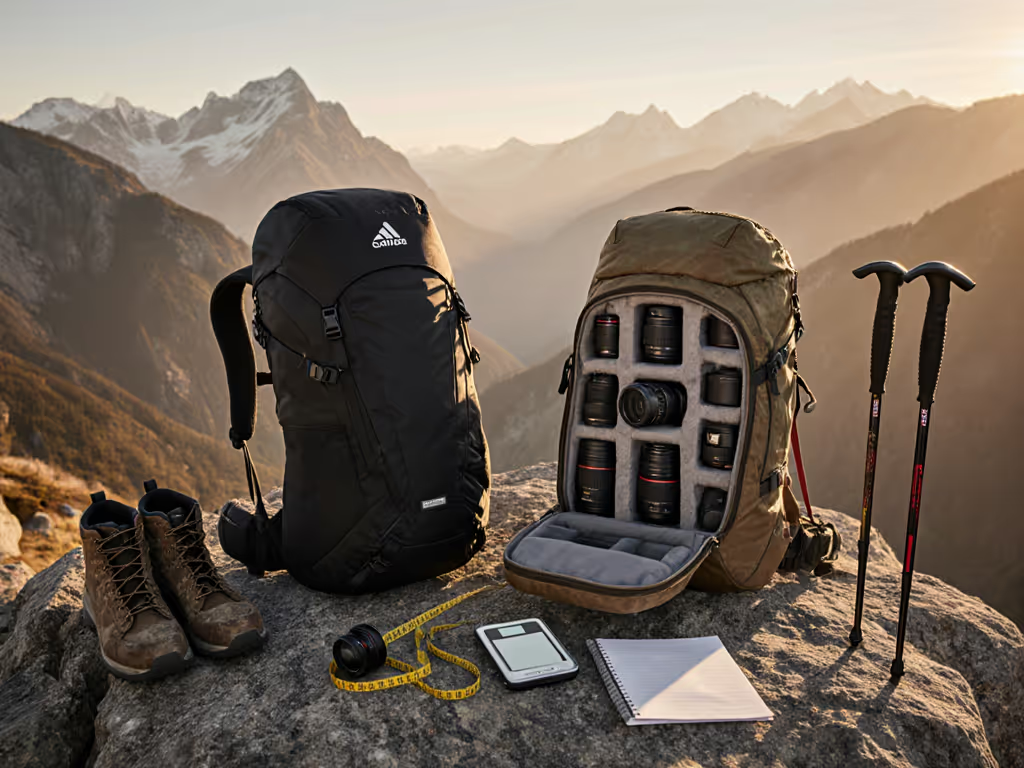
1. Armored Expedition Backpack
Profile: Tall, framed, weather-resistant backpack with full back-panel access and configurable internal cube. Think "mountain pack meets camera insert".
Strengths in Testing
- Weather: Top performer. Laminated fabrics and deep storm flaps stayed dry inside in 30-minute rain runs. Dust stuck to the exterior but barely reached the camera cavity.
- Impact: Framed structure plus dense foam base spread corner drops well. Sensor blocks showed the lowest recorded shock transfer.
- Comfort: Best with 10-12 kg loads when the hip belt is correctly fitted. Load lifters matter; without them, tall bags pull you backward. For fit and load transfer fundamentals, review our camera bag ergonomics guide.
- Carry-on: Most models thread the carry-on needle if you do not overstuff the front pockets.
Weaknesses
- Access Speed: Back-panel access is slower. With the bag removed and laid flat, time-to-shot averaged mid-pack. When using a side zip on one strap, times improved but were awkward on shorter torsos and with winter layers.
- Noise: Zippers were quiet enough; the main noise came from stiff fabrics flexing when you flip the bag down.
Best Use Cases
- Adventure documentary protection in mountains, jungles, snowfields.
- Long shuttles between locations where comfort and survival of gear matter more than reaction time.
Watch For
- Overbuilt frames that make the bag heavy even when empty.
- Hip belts that do not cinch small enough for shorter or slimmer bodies.
--
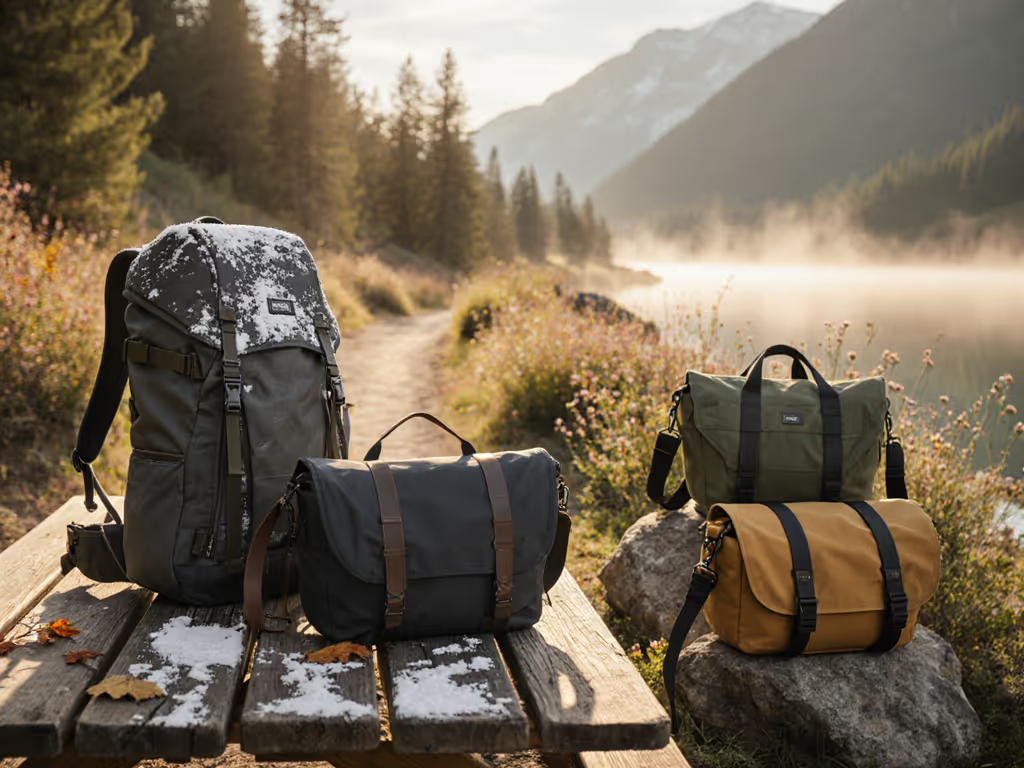
2. Discreet Conflict-Zone Shoulder / Messenger
Profile: Low-profile shoulder or cross-body bags built to pass as work bags or courier satchels. These are the backbone of discreet security camera cases and conflict zone camera bags when blending in is priority one. For theft-deterrence benchmarks and lockable hardware comparisons, see our anti-theft camera bag tests.
Strengths in Testing
- Access Speed: Fastest time-to-shot by a clear margin. With the bag worn cross-body and flap pre-tensioned, camera-in-hand times consistently landed in the 1-2 second range.
- Stealth: Minimal branding, neutral colors, and "non-camera" silhouettes attract fewer glances in transit, protests, or tense neighborhoods.
- Noise: Best-in-class when configured right. Magnetic closures and pre-opened zips allow nearly silent pulls near a live mic.
Weaknesses
- Weather: Even the best-treated fabrics lag behind expedition packs. Water tends to pool at flap edges; sustained rain sessions revealed minor ingress along seams unless a secondary cover or umbrella is used.
- Impact: Good side padding, weaker on the bottom corners. Harder to protect during a crowded jostle or stumble.
- Comfort: Asymmetrical load. At 8-9 kg, shoulder fatigue is real after a full day, especially for smaller frames.
Best Use Cases
- Street-level photojournalism field bags in dense urban environments.
- Humanitarian mission camera gear when meetings, clinics, and offices are part of the daily route.
- Any assignment where a "camera backpack" look increases risk.
Watch For
- Flaps that require both hands to open fully.
- Velcro-heavy designs that contaminate audio.
--
3. Modular Chest / Belt Rig + Small Pack
Profile: A chest rig or belt with pouches for bodies and lenses, paired with a lightweight backpack for support gear, layers, water, and laptop.
Strengths in Testing
- Access Speed: On par with or slightly behind messenger bags, but while moving. Time-to-shot with a body in a chest pouch was consistently under 2 seconds even while walking.
- Mobility: Excellent for sprinting, climbing, or riding. Load sits close to center of mass.
- Modularity: You can build tight task zones: chest for ready camera and batteries, belt for lenses, back pack for administration and survival.
Weaknesses
- Complexity: More straps, more buckles, more snag points. Setup time is non-trivial.
- Heat: Chest rigs trap heat and sweat in hot climates or under body armor.
- Stealth: Chest pouches broadcast "working photographer" unless covered.
Best Use Cases
- High-risk conflict zone camera bag setups where body armor or helmets are standard.
- Fast-moving action coverage: evacuations, search-and-rescue, or dynamic protest lines.
Watch For
- Belt rigs that don't size down for smaller waists.
- Chest rigs that sit too low and conflict with hip belts.
--
4. Hard Case + Soft Shell Combo
Profile: Rolling or carry hard case for transit and base storage, plus a smaller backpack or messenger for active shooting.
Strengths in Testing
- Impact: Hard cases outclass everything else for drops, crush, and baggage handling. Sensor blocks showed minimal shock transfer.
- Weather & Dust: With intact seals, hard cases remain bone-dry and dust-free through all tests.
- Organization: Ideal for a full system: bodies, lenses, audio, drone, and backups in clearly separated cavities.
Weaknesses
- Access Speed: Slow in transit; you rarely work directly from the case while moving.
- Mobility: Poor on stairs, rubble, or tight vehicles.
- Cognitive Load: Two-stage system: you must plan what migrates from hard case into your soft bag for each move.
Best Use Cases
- Staged adventure documentary protection where you have a basecamp or vehicle.
- Multi-person crews who share a central pool of lenses and audio.
Watch For
- Oversized cases that fail carry-on checks on regional airlines.
- Relying on the hard case as your only system in foot-heavy jobs.
--
Lab Results: Side-by-Side Comparison
Below is a simplified view of how the four archetypes scored relative to each other with the Hybrid News Kit.
| Metric | Expedition Backpack | Discreet Shoulder | Chest/Belt + Pack | Hard Case + Soft Bag |
|---|---|---|---|---|
| Weather Resistance | Excellent | Fair-Good | Good | Excellent |
| Dust Resistance | Excellent | Fair | Good | Excellent |
| Impact Protection | Excellent | Good | Good | Outstanding |
| Time-to-Shot (avg) | Moderate | Fastest | Fast | Slowest |
| Comfort at 10-12 kg (8 hrs) | Best (with fit) | Fair | Good | N/A while rolling |
| Stealth / Non-Camera Appearance | Moderate | Best | Poor-Moderate | Poor |
| Noise Near Mic | Good | Best (if tuned) | Moderate | N/A in active use |
| Modularity / Reconfig Speed | Good | Fair | Best | Good |
| Airline Carry-On Reliability | Good | Best | Good | Variable |
Numbers are relative, but the spread is clear: there is no universal winner, only better matches for specific jobs.
--
Building Task Zones Inside Any Bag
Archetype choice gets you 70% of the way. The remaining 30% is how you map your interior to tasks.
I rebuilt my own kit after a buried battery turned a live stream into sixty seconds of dead air. The fix wasn't a new logo; it was rethinking where every object lives and how it moves through the day.
Think in three task zones: If you're new to structuring interiors, start with our 5-step camera bag organization checklist.
1. Shoot-Ready Zone
- Primary body with workhorse lens.
- One spare battery and one formatted card.
- Minimal friction: no secondary zips, no flaps that require both hands.
Checklist:
- Can you grab the ready body with one hand while the other manages a rail, door, or mic stand?
- Can you do it without looking?
- Is the move quiet enough not to spike your audio?
2. Reload Zone
- Remaining batteries and cards.
- Secondary lenses you swap often.
- Accessible once you take half a step out of the scene (kneeling behind a vehicle, ducking into a doorway).
Checklist:
- Orientation locked in muscle memory - batteries always "positive terminal up," for example.
- Pouches sized so nothing tumbles or hides.
3. Support / Survival Zone
- Rain shell, gloves, med kit, water.
- Laptop, drives, documents on humanitarian mission camera gear jobs.
Checklist:
- Does adding a laptop crush your camera padding or block access?
- Can you reach med kit or water without emptying a camera compartment?
Map these zones differently for each archetype, but keep the logic identical across all your bags. Your fingers should know the layout even when you switch from city messenger to alpine pack.
A bag's job is to make the next frame inevitable, not to display your inventory.
--
Scenario-Mapped Recommendations (Final Verdict)
Here is how I'd match archetypes to typical documentary profiles.
1. Urban Conflict / Protest Photojournalist
- Primary: Discreet Shoulder / Messenger
- Secondary: Small, unbranded daypack for layers, water, and backup body.
Why: You live on access speed, stealth, and quiet. Fast cross-body draws beat perfect weather sealing. Add inexpensive dry bags inside for extra rain insurance.
2. Adventure Documentary Shooter (Mountains, Jungles, Arctic)
- Primary: Armored Expedition Backpack
- Secondary: Minimal chest rig or strap-mounted pouch for one body.
Why: Load carriage, weather resistance, and impact protection matter most. A small, always-ready camera pouch mitigates slower backpack access.
3. Humanitarian Mission / NGO Storyteller
- Primary: Discreet Shoulder or Slim Backpack that passes as a work bag.
- Secondary: Small hard case at base or guesthouse with backup kit.
Why: You're in cars, clinics, offices, and field sites. Professional but low-profile aesthetics matter, along with good laptop/file organization and enough structure for mixed humanitarian mission camera gear.
4. High-Risk Conflict Zone with Body Armor
- Primary: Modular Chest / Belt Rig
- Secondary: Lightweight backpack with extra lenses, water, med kit.
Why: Armor and helmets break normal harness geometry. Chest/belt systems keep cameras operable when vests and plates are non-negotiable.
5. Crew-Based, Vehicle-Supported Documentary Work
- Primary: Hard Case + Soft Shell Combo
Why: The case protects the system in trucks and planes; each operator works out of a personal shoulder bag or small backpack. Build standard task zones so you can swap roles and rigs without thinking.
--
Summary and Final Verdict
If you want a one-line takeaway: choose archetype by environment and threat, then tune task zones by workflow.
- For maximum weather and impact protection with long approaches, the expedition backpack wins.
- For stealth, speed, and client-appropriate looks in cities, the discreet shoulder is hard to beat.
- For armor-compatible, high-mobility work, a chest/belt rig with a small pack is the most adaptable.
- For vehicle-based or crewed operations, the hard case plus soft shell system offers the safest foundation.
From there, enforce your own test protocol: weigh a realistic kit, time your access, walk your longest expected day, and note hot spots and failure points. When a bag disappears into your muscle memory (and your hands find batteries and bodies without hunting), you'll know you've moved beyond gear collecting.
The right extreme-environment bag is not the one with the thickest shell; it is the one that lets you stay ahead of the moment. Time-to-shot rules; everything else supports the next frame.
Related Articles