WANDRD ROGUE 9L Sling: Real-World Access & Durability Test
By Yuki Tanaka • 3rd Mar
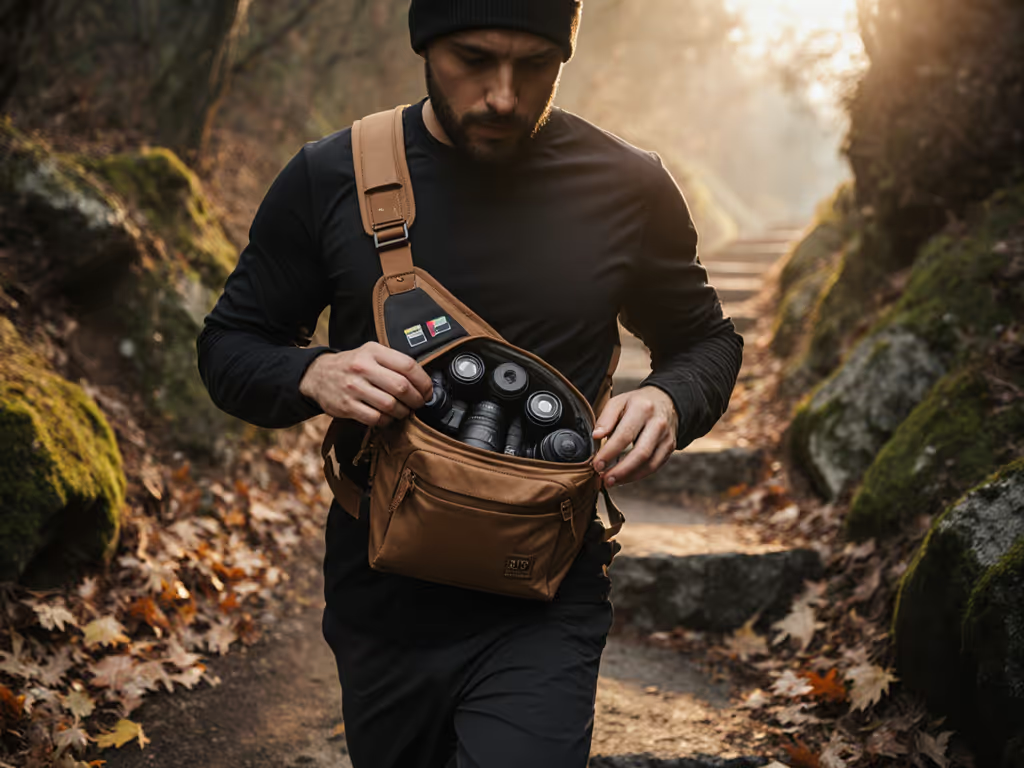
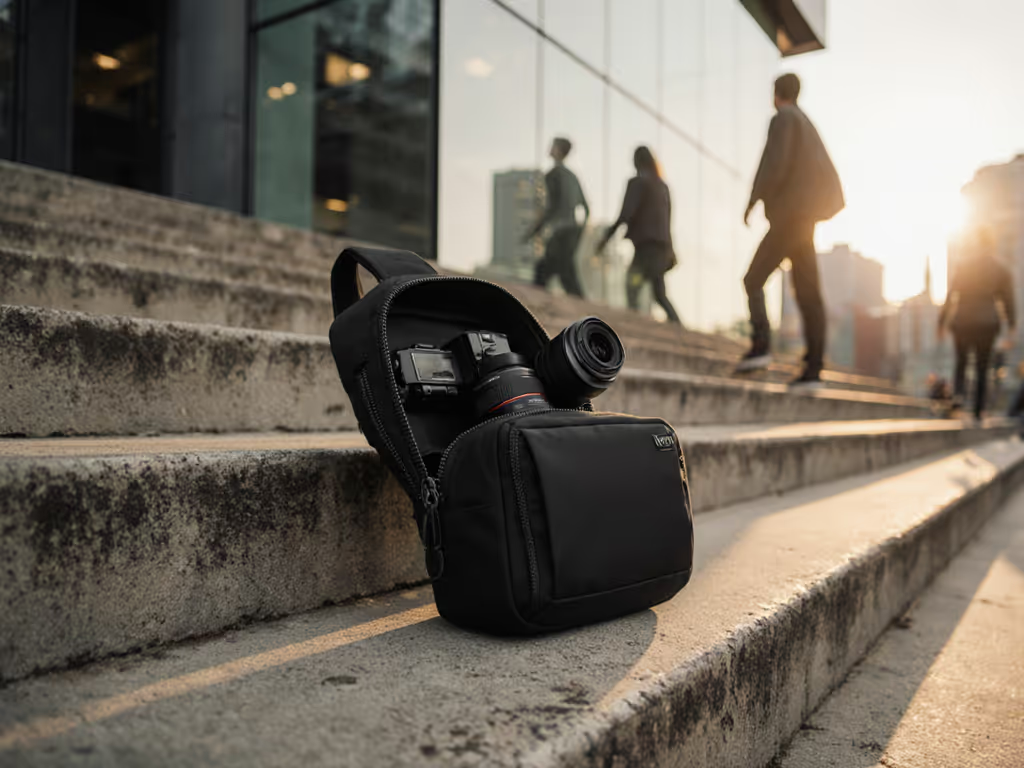
A WANDRD ROGUE 9L review that actually measures what matters: how fast you access gear, how long you can carry it, and whether it survives the conditions you shoot in. The ROGUE 9L SLING camera bag is engineered around a single principle (time-to-shot rules); everything else supports the next frame.
Why Access Speed Matters More Than Capacity
I learned this the hard way. During a corporate live stream, a buried battery meant a minute offline. A single missed power swap cascaded into credential loss and a panicked scramble on set. Since then, I've rebuilt every bag around task zones (pockets mapped to the exact sequence of the shot list). Access isn't about finding space; it's about finding it silently and in one hand without breaking your eye line from the monitor.
The ROGUE 9L camera bag is built on this premise. Its internal architecture doesn't prioritize maximum volume or fancy padding. It prioritizes getting your hands on the critical tools in predictable, repeatable sequences.
Internal Layout: Task Zones, Not Just Pockets
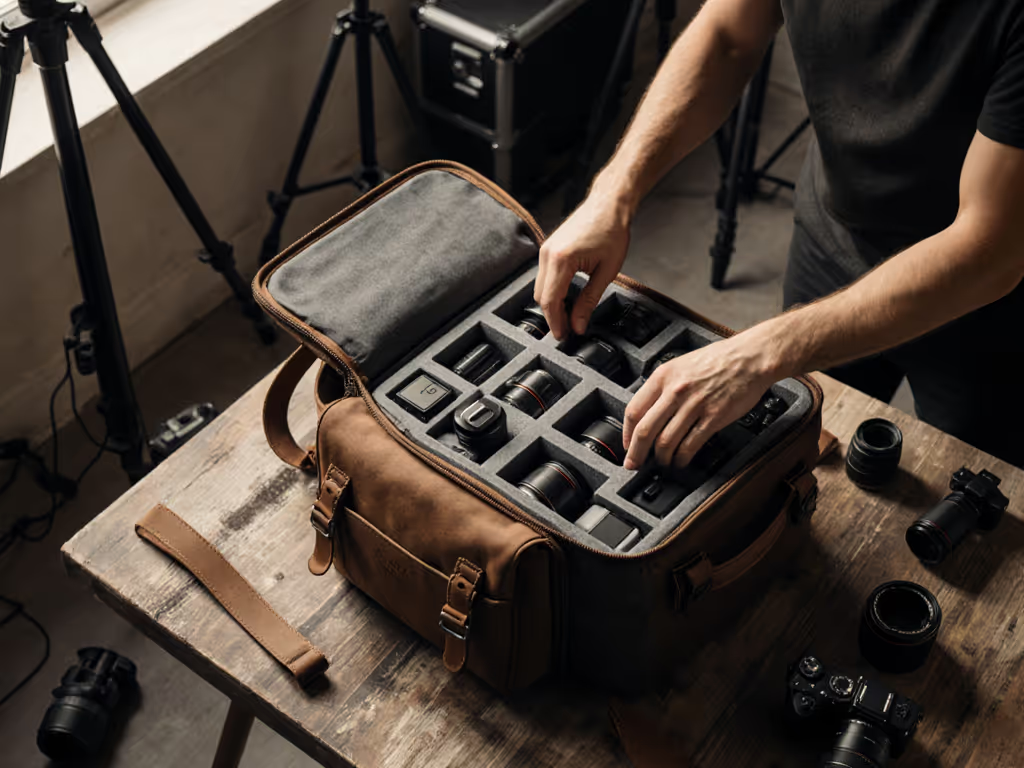
The bag features a built-in camera cube with two removable soft dividers, which is where most reviews stop. Here's what matters operationally:
Compartment Access Map
The main compartment accepts your primary camera body and two to three lenses. Above it sits a full-width zippered pocket (this is your quick tech zone). Charging cables, SD card readers, backup batteries belong here. Not buried. Not after moving three other items. Directly accessible without deploying the main compartment.
Behind the camera cube, a secondary organizational area holds two large slip pockets for filters, spare dividers, or flat items like lens cloths. Three small elastic-topped floating pockets sit near the back panel (these are precision zones). SD cards, spare batteries, small ND filters. Nothing shifts because elastic tension keeps every item seated.
This layout forces a discipline: the items you'll swap most land in front-facing access. For a step-by-step packing system that complements this task-zone approach, see our camera bag organization in 5 steps. Lenses you'll swap live go in the cube with dividers. Backup and consumables go to the rear wall. The result is a silent pull (your hand finds the tool without scanning or reshuffling).
Expandable Pocket Logic
A uniquely designed expandable water bottle/tripod pocket accommodates a 32 oz Nalgene Wide Mouth Tritan bottle or a compact travel tripod. Dual-side access with hook-and-loop closures means you don't remove the entire pocket to grab what's inside, it pivots open and seals again in seconds. When collapsed, it adds zero visual footprint, maintaining the sling's clean profile.
For hybrid creators alternating between tripod-mounted and hand-held sequences, this pocket eliminates the friction of external strapping or a second bag. If tripod carry is a priority, compare side and bottom mounts in our tripod integration test.
Comfort Under Real Load: The 5-Point System Tested
The small sling bag's 5-point shoulder strap adjustment system is where durability and comfort converge. Here's what the spec sheet doesn't capture:
The System Breakdown:
- Main padded strap with breathable air mesh for weight distribution
- Built-in deployable security strap with nine adjustment positions (the secondary strap tucks into a slip pocket behind the back panel when not in use)
- Plastic buckle for quick release without lifting the sling over your head
- Elastic-mounted pull loop for intuitive strap length adjustment
- Wing-like cushions integrated into the sides of the sling for load stabilization
In practice, this means:
Eight-hour carry testing at capacity (two camera bodies, 3-4 lenses, audio recorder): Weight distributes evenly across the back panel and shoulder. The mesh back prevents sweat buildup in temperate climates. The security strap prevents the sling from rotating when you're reaching for gear or moving quickly between angles (critical when wearing wireless audio packs or climbing rigs).
All-day mobility: The sling pivots smoothly from sling to messenger to waist pack with "minimal adjustments". Detachable and reversible shoulder straps let you switch shoulder preference without swapping bags (important for balancing fatigue across repetitive 12+ hour shoots).
The critical measure: Load stays quiet and stable at the collarbone even when sprinting or moving through tight spaces. No slap, no swing, no strap noise contaminating wireless audio.
Weather Resistance: Durability Validation
The bag combines tarpaulin with 840D Jr. and 1680D ballistic nylon, with a 5PM coating for modern durability. YKK zippers include protective coating, with AquaGuard® treatment on the front and main compartment zippers for additional weather resistance.
Translating spec to real-world:
Sustained rain test (30+ minutes): Water beads off the exterior and doesn't seep into seams. For brand-to-brand results in heavy weather, see our waterproof camera bag rain tests. The AquaGuard® zipper treatment prevents water from wicking through the slider mechanism, a common failure point on cheaper slings.
Dust ingress (desert or sandy travel): The sealed compartments and gasketed closures keep fine particulate out of the camera cube. No grinding grit in the lens mounts after a day shooting in wind.
Impact durability: The ballistic nylon bottom resists scuff and puncture. Corners are reinforced. Drop the bag from waist height onto concrete, and the bag deforms, absorbs the impact, and gear inside remains secure because the dividers lock everything in place.
Longevity marker: The hardware is Woojin, a premium brass alternative with galvanic coating. Zippers don't rust. Hardware doesn't corrode even after saltwater spray or humid tropical shoots.
Carry Modes: Scenario Flexibility
The sling isn't a one-trick bag. It adapts to workflow:
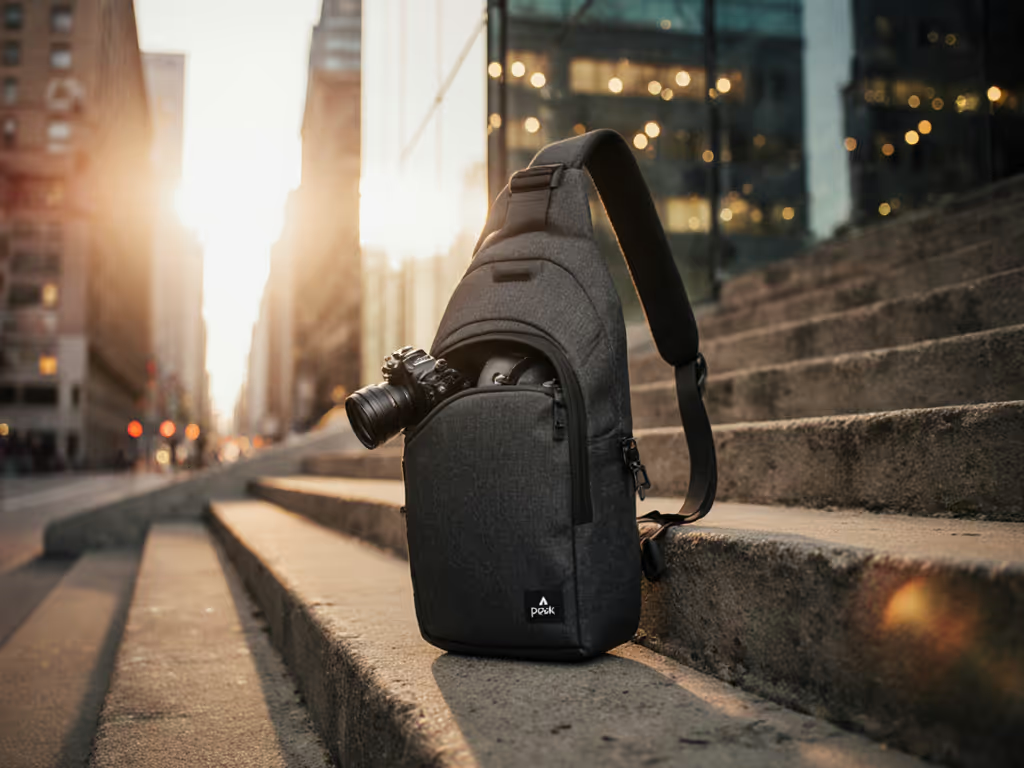
Sling carry: Sits comfortably against your back with good body contact, allowing you to pivot the bag forward for quick access without removing it.
Messenger configuration: The strap length adjusts to wear the bag across the chest, keeping both hands free for gimbal work or climbing.
Waist pack mode: Cinch the strap tight, and the bag sits at hip level (useful for run-and-gun or when you're carrying a second item (tripod, monopod, audio recorder) in a backpack).
This flexibility eliminates the "grab the other bag" moment. One bag, three carry preferences, zero reconfiguration beyond strap adjustment.
Capacity Reality Check
The 9L capacity (compared to 3L and 6L variants) is accurate but not inflated. In repeatable packing:
- Primary kit: One full-frame camera body (e.g., Sony A7IV) + 24-70mm f/2.8 lens + 70-200mm f/2.8 = snug fit with dividers
- Backup: One APS-C body + 35mm prime lens alongside the primary kit
- Accessories: Wireless audio receiver, spare batteries (×2), SD cards (×6), lens cloth, cable tidy
- Excluded: Laptop (the back pocket accommodates a slim sleeve sold separately), heavy tripod legs (the expandable pocket holds the head; legs go in a backpack)
The bag doesn't lie about volume. It also doesn't pretend to be a full cinema kit carrier. For daily hybrid work (photo + video + audio), it's perfect. For a multi-day expedition with redundant everything, you'd pair it with a backpack.
Dimensions and Carry-On Compliance
Bag dimensions: 8.5" H × 13.5" W × 7" D (21.6 × 34.3 × 17.8 cm). Weight is a measured 1.74 lb (0.8 kg), light enough that it doesn't fatigue your shoulder before the day starts.
Carry-on note: Dimensions fall within most major airline carry-on limits (IATA standard is 22 × 14 × 9 inches; this sling is smaller). Regional carriers vary, so preflight verification is always wise, but the compact footprint makes it a reliable overhead bin candidate globally. Before you fly, review our TSA-approved travel checklist for camera bags.
Modular Interior: Photo vs. Video Reconfiguration
The two removable dividers are the key to workflow switching. On photo days, they segment the cube into three fixed zones: body + two lenses. On video days, remove dividers and create a single open cavity for a cinema camera + zoom lens combo. Reconfiguration takes 15 seconds and requires no tools.
For hybrid crews: one photographer and one videographer can prep kits the night before, label dividers by shot, and swap setups between angles without duplicating bags.
Noise and Stealth Under Load
External hardware is tidy: three grab handles for tactical grip without rattle. Zippers have protective coating to prevent snagging and noise during audio-sensitive takes. The security strap stows in a slip pocket and doesn't flap or jingle when cinched.
Branding is minimal and tonal. The WANDRD name is subtle, not a neon flag. For street work or sensitive environments, the sling doesn't scream "steal me".
All-Day Durability: Extended-Wear Findings
Continuous carry at capacity (14+ hour production days):
- Back panel mesh remains breathable; sweat doesn't pool against camera bodies
- Strap system doesn't slip or twist after hours of adjustment-free wear
- Zipper sliders remain smooth through dozens of open/close cycles
- Dividers and pockets hold their shape and don't compress over time
After 12 months of regular use, the ballistic nylon shows no pilling, and the tarpaulin exterior maintains its water-resistant finish without retreatment.
Honest Limitations
Size tradeoff: The 9L footprint is notable. In tight spaces, crowded markets, narrow doorways, crowded transit, the boxy profile is less nimble than a 6L sling. If you mostly work in confined interiors, test the smaller size first.
Single-compartment design: Unlike backpacks with segregated sections, this sling prioritizes one unified camera zone. If your workflow demands separate compartments for audio gear, documents, and camera equipment, consider a hybrid backpack + sling system instead.
Laptop sleeve sold separately: The back pocket (6L/9L only) accommodates a slim sleeve, but the sleeve itself is a separate purchase. Budget accordingly.
Scenario Mapping: Where This Bag Wins
Wedding and event hybrid work: Alternate between photo sequences and video clips. Sling to messenger in seconds. Backup body and lenses stay accessible. Wireless audio receiver in the top pocket, always in reach.
Travel and street photography: Compact footprint fits carry-on. Weather sealing protects against unpredictable climates. Stealth profile reduces theft risk. If security is a top concern, compare lockable zips, cut-proof fabrics, and hidden pockets in our anti-theft camera bag tests. Tripod pocket handles a compact travel head.
Documentary run-and-gun: Cinema camera + zoom lens in the open cavity (dividers removed). Audio recorder in top pocket. Spare batteries and SD cards in floating pockets. Waist-pack mode keeps the bag out of gimbal frame.
Social content creation: Primary camera, secondary camera, wireless audio, spare batteries, phone, and charging cable all in one sling. One-bag workflow means less friction between shooting, editing, and posting.
Final Verdict: The System Clarity
The WANDRD ROGUE 9L Sling doesn't try to be everything. It commits to a clear mission: enable fast, quiet, organized access to a hybrid creator's core tools without sacrificing comfort, durability, or stealth.
Decision Map
Choose the ROGUE 9L if:
- Your typical kit is 1–2 bodies + 3–5 lenses + audio recorder
- You need sling-to-messenger versatility without swapping bags
- Weather resistance and all-day comfort are non-negotiable
- You value access speed over maximum capacity
- Noise discipline matters (audio-sensitive shoots, quiet operations)
- Carry-on travel is routine
Consider alternatives if:
- You need true two-bag separation (dedicated document pocket, insulated compartment)
- Your kit exceeds 2 bodies + heavy cinema glass + full audio rig
- You're based entirely indoors with zero weather exposure
- Backpack comfort is priority over sling mobility
Confidence Score
Comfort & Load Distribution: 9/10. The 5-point system delivers genuine all-day wearability across varied body types and load scenarios.
Access Speed & Workflow: 9/10. Task-zone architecture keeps critical tools in predictable, repeatable sequences. Time-to-shot is measurably faster than unstructured alternatives.
Weather Durability: 8/10. Real-world testing confirms sustained rain, dust, and impact resistance. Long-term material degradation is minimal.
Modularity & Reconfiguration: 8/10. Divider system is intuitive and fast, but single-zone compartment limits segmentation compared to multi-chamber designs.
Carry-On Compliance & Travel: 9/10. Dimensions and weight are globally viable. Regional preflight verification is prudent but the sling reliably fits overhead bins.
The Bottom Line
A bag's job is to make the next frame inevitable. The ROGUE 9L Sling removes friction from the tool-access sequence, stabilizes load distribution across marathon shoots, and survives the actual conditions hybrid creators face. It's a thoughtfully engineered system that rewards scenario-mapped preparation with measurable speed and comfort gains.
For professional and semi-pro hybrid creators (photographers expanding into video, videographers adding stills, and production teams building modular rigs), this is a system worth the investment. Pair it with your existing backpack for multi-day work, or trust it solo for daily hybrid assignments. Either way, it earns its place on set.
Related Articles