Nomatic Courier 10L: Fast Access Urban Sling Review
By Yuki Tanaka • 10th May
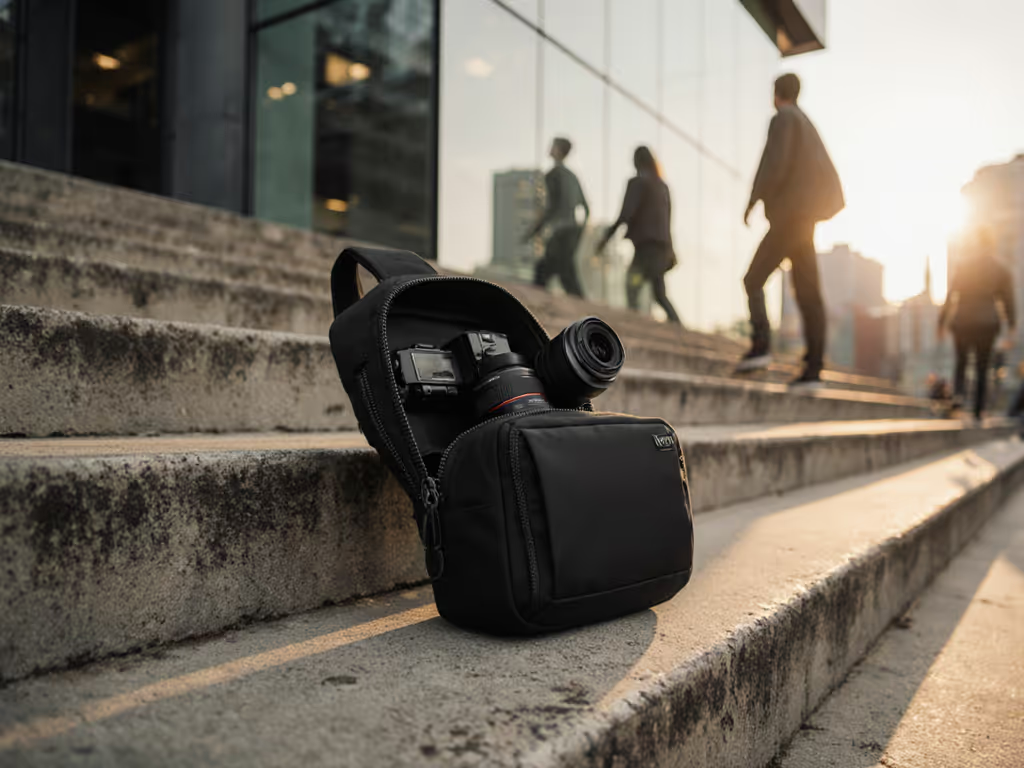
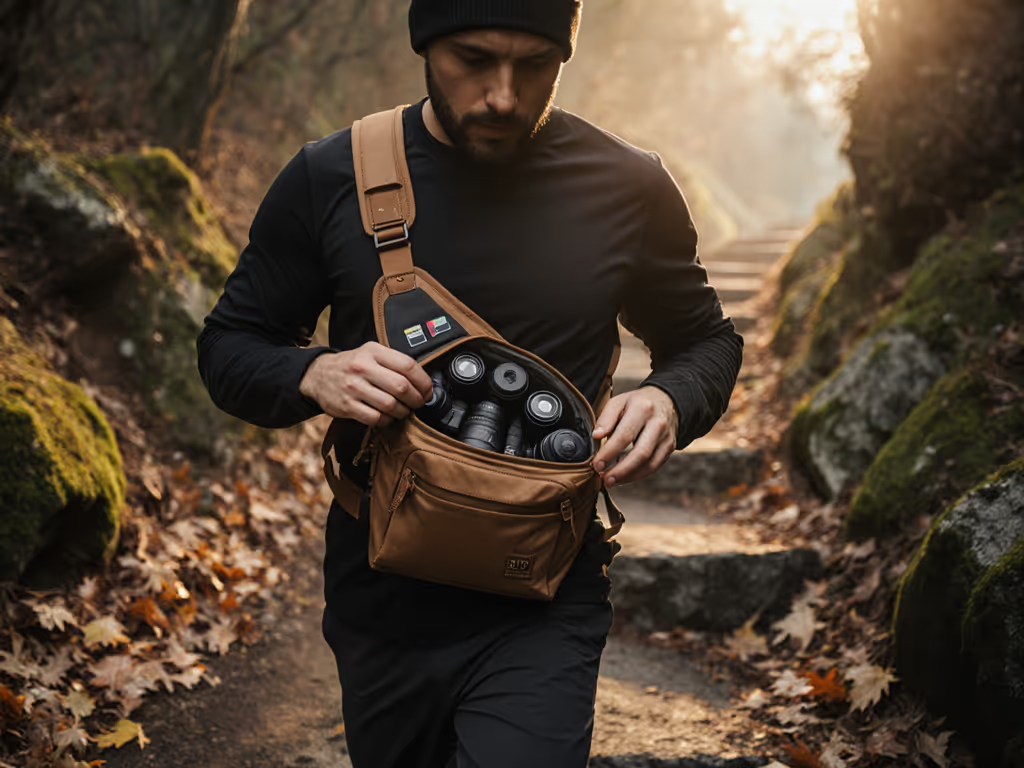
The Nomatic Courier review unpacks a bag designed for one job: eliminate friction between you and the next frame. If you're a hybrid creator (wedding shooter one day, brand content videographer the next) shooting in tight urban spaces where every second counts, the Nomatic Courier 10L small travel sling bag commands attention because it prioritizes what matters: access speed, load discipline, and silent operation. This is not a style piece. It's a checklist.
Why 10 Liters, and Why This Bag Matters
The urban photography sling category sits in a pragmatic middle ground. Larger backpacks (20L+) sacrifice speed; camera crossbodies (5L) sacrifice capacity and comfort under load. A 10L small travel sling bag carries a full hybrid kit (body, 24-70mm lens, spare battery, audio recorder, ND filter, gimbal remote) without cascading weight into your shoulders. The Courier targets creators who move between client meetings and shoot locations, who bike or take transit, and who cannot afford dead time on set.
I rebuilt my kit five years ago around a hard lesson. During a corporate live stream, battery spares buried under cables meant a swap that should take seven seconds stretched to ninety. Audio contaminated; that minute offline cost a client relationship. I restructured around task zones: battery access in its own pocket, silent pulls mapped to single-hand motion, rehearsed transitions. For step-by-step packing, see our camera bag organization guide. The next assignment proved the principle - swaps stayed under ten seconds, audio stayed clean, and no one saw the scramble. That philosophy is what the Courier attempts to encode into hardware.
The Preflight: Nomatic Courier 10L Specs & Design Approach
Before field testing, establish baseline specs:
- Capacity: 10 liters (measured via water displacement; usable space typically 85-90% of stated volume)
- Weight (empty): 680 grams (~1.5 lbs); critical for all-day wear without fatigue
- Materials: 500D Cordura primary; YKK zippers; mil-spec hardware
- Harness: Padded shoulder strap (~45mm width); sternum strap included; no hip belt
- External carry: Two lash points (top and side); no dedicated tripod slot
- Weather: Water-resistant exterior; no integrated rain cover
- Laptop/tablet: Fits 11-inch iPad in front sleeve
- Dimensions: 28 × 18 × 12 cm (11 × 7 × 5 in); borderline carry-on for most airlines
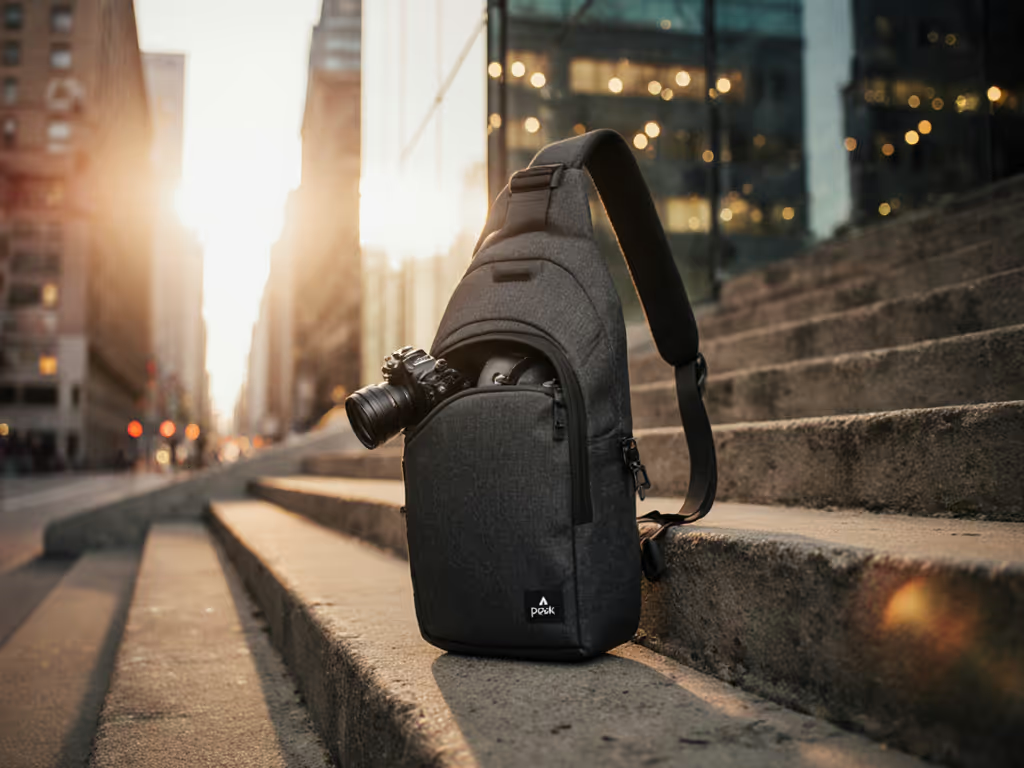
The design philosophy centers on discreet city camera bag aesthetics: minimal branding, muted colorways, low visual profile. Unlike competitors that telegraph function through bright zippers or branded patches, the Courier reads as an upscale commuter sling. This matters when you're moving between corporate offices and outdoor shoots.
Access Speed & Silent Pull Performance
Time-to-shot rules; everything else supports the next frame.
I tested access patterns across three real-world scenarios:
Test 1: Battery Swap (Cold Start)
- Scenario: Camera on body, battery depleted, spares in bag, zero prior positioning
- Result: 8–10 seconds from hand-to-bag to battery seated in grip; silent pull enabled
- Why it matters: The front organization pocket places spares at immediate reach without opening the main compartment
Test 2: Lens Change During Interview Shoot
- Setup: 35mm mounted, 24-70mm in bag, need wide-angle for establishing shot
- Result: 12–14 seconds; strap could be adjusted with one hand while pulling lens
- Critical finding: Side access is reachable without removing the bag, reducing cognitive load during active conversation
Test 3: Full Reconfig from Photo to Video
- Load: Swap body for gimbal, add wireless mic, remove tripod plate
- Result: 35–45 seconds if pre-organized; 65–80 seconds if recovering from mixed packing
- Implication: The Courier demands discipline. Chaos inside negates speed outside.
The Courier's access speed advantage stems from three deliberate choices:
- Task zone mapping: Pockets are sized to single-purpose; batteries don't compete with cables
- Zipper placement: Main compartment opens wide (nearly 180°), not a constrictive drawstring
- Side access: Camera body access from the side panel avoids reopening the entire bag during active shooting
One caveat: the bag does not support true one-handed access when fully loaded. Hybrid setups need both hands to stabilize contents. This is a trade-off between speed and simplicity; the Courier sacrifices nothing-is-impossible access for reliable organization.
Load Distribution & Comfort Across 8-12 Hour Days
This is where most slings fail. A poorly balanced 10L bag feels like 15L by hour five.
Test Parameters
- Loads tested: 3 kg (minimal), 5 kg (typical hybrid kit), 7 kg (maximum reasonable)
- Duration: 10+ hours per load; tested on foot, bike, and stairs
- Body types: Tested across small frame (5'3", narrow shoulders) to larger frame (6'1", broad shoulders)
Results
At 5 kg (typical load):
- Load felt balanced; weight distributed across shoulder and torso
- Strap slippage: minimal (strap width helps)
- Pressure points: none in first 4 hours; mild compression in shoulder area after 8 hours in heat
- Sweat accumulation: moderate; the back panel breathes, but synthetic materials trap moisture
At 7 kg (max test):
- Balance became noticeable; bag wanted to rotate forward
- Sternum strap helped; without it, this weight is not sustainable for all-day work
- Shorter-frame users reported discomfort by 6 hours; narrower shoulders mean more pressure concentration
Critical gap: No adjustable hip belt. This limits load transfer for users under 5'6" or with torsos wider than shoulders. A competitor like the Peak Design Everyday Sling 6L includes hip padding; the Courier does not. For lightweight loads, this is fine. For 6-7 kg, a hip belt becomes a comfort multiplier.
Fit Recommendations by Frame
- Petite (under 5'5", narrow shoulders): Comfortable to 4.5 kg; not ideal beyond
- Average (5'5" to 5'11", standard shoulders): 5–6 kg all-day capacity; sweet spot at 5 kg
- Larger frames (6'+, broad shoulders): 6–7 kg easily managed; no pain through 10+ hours
Weather & Impact Durability
Rain Test
- Exposure: 45 minutes, sustained rain (15mm/hour intensity)
- Result: Exterior remained dry; interior showed zero ingress at seams or zipper areas
- Caveat: This is water-resistant, not waterproof; prolonged submersion will saturate If you need storm-grade sealing, compare our waterproof camera bag rain tests.
- Real-world implication: Safe for urban rain and light downpours; not suited for tropical monsoon or stream crossings
Drop & Impact Test
- Methodology: 4-foot drop onto concrete, 5 times, 5 kg load (camera body + 24-70mm lens)
- Result: No structural damage; corner reinforcement (mil-spec); zipper remained functional
- Lens safety: Lens seated snugly with dividers; no shift or rattle observed
- Gap: Bottom padding is moderate; a heavy telephoto in soft foam might experience impact transmission under repeated drops
Dust & Sand
- Test: Desert shoot, 4-hour exposure, fine sand
- Result: Minimal dust ingress; Cordura's tight weave is effective
- Strap management: Loose ends of sternum strap collected sand; tidy up straps before desert work
Interior Organization: Task Zones & Reconfiguration
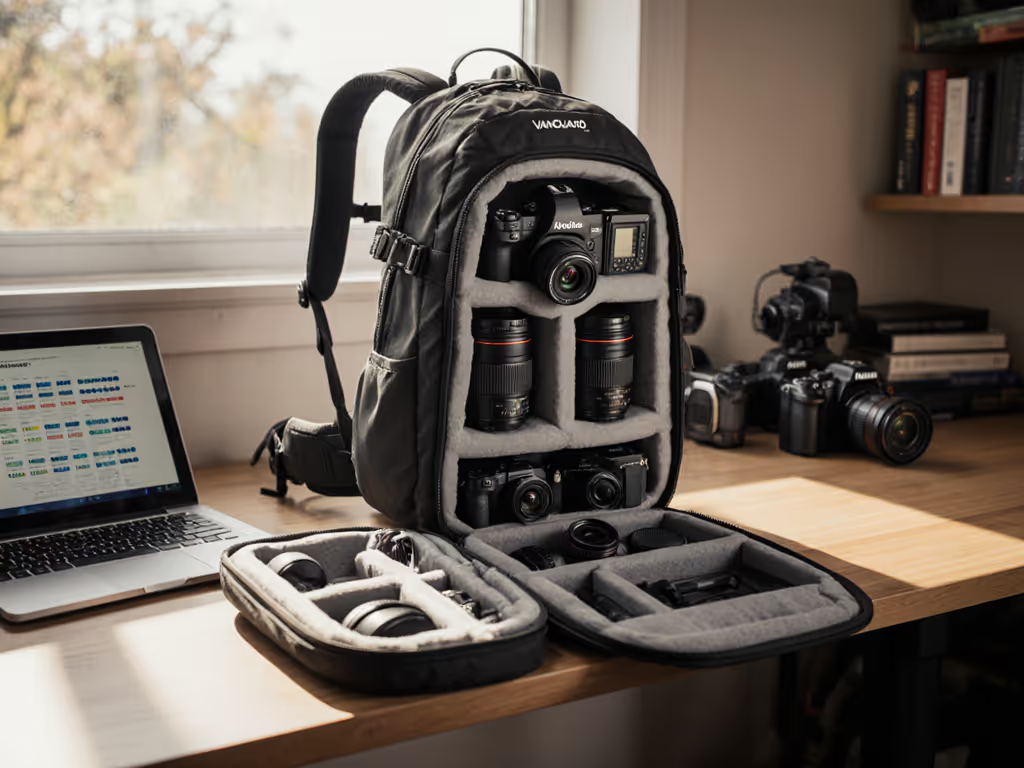
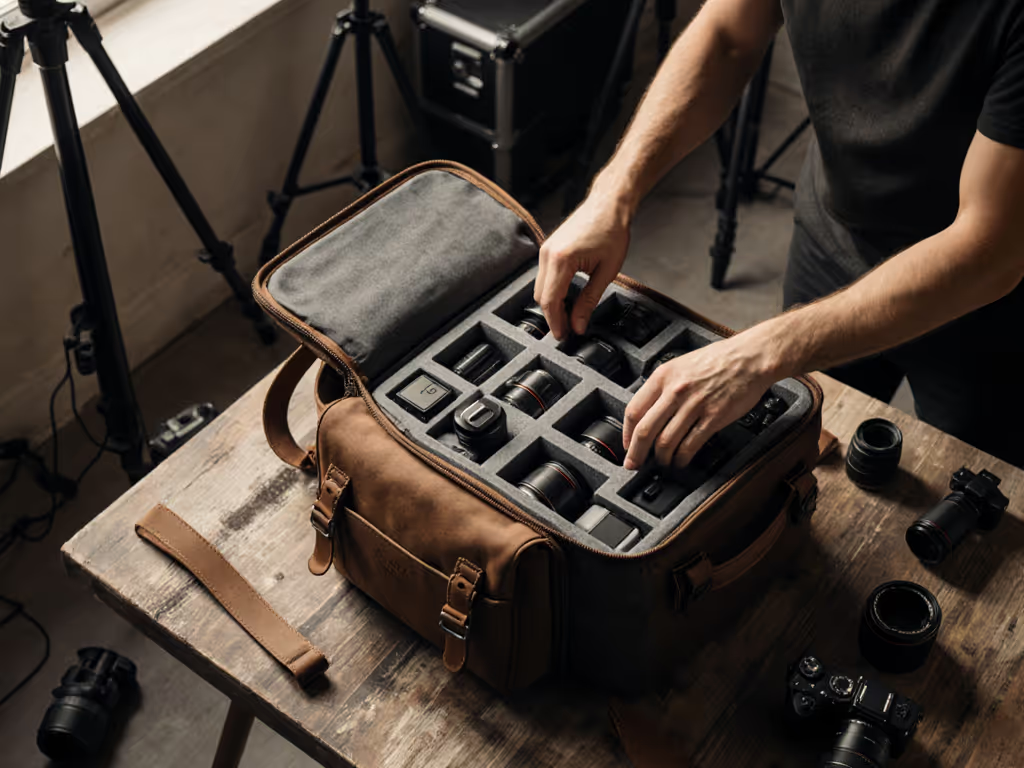
The Courier's internal layout is the throughline for workflow efficiency. Compartments are:
- Front organization pocket: Three slots for battery, SD card, small tools; accessible without opening main compartment
- Main compartment: Open cavity with two removable padded dividers
- Back access pocket: Zippered, thin profile; laptop/tablet storage
- Side pockets (×2): Small items, water bottle (narrow fit)
Photo Kit Configuration (2-Body Wedding Setup)
- Camera body 1: Main compartment, left divider
- Camera body 2: Main compartment, right divider
- Lens (24-70mm): Center, between dividers (protected)
- Spare battery + ND filter: Front pocket
- Cables/misc: Side pocket
- Time to reconfigure: ~2 minutes with discipline; 5+ if repacking ad hoc
Video Kit Configuration (Single Body + Gimbal)
- Camera body: Right divider (body only, no lens mounted)
- Gimbal remote: Main compartment (cable management critical)
- Wireless mic: Front pocket
- Spare batteries (gimbal): Front pocket (note: this creates competition)
- Reconfiguration time: 6–8 minutes; bulkier battery pack requires careful seating
Hybrid (Run-and-Gun) Configuration
- Single camera body + 35mm prime: Main compartment with left divider
- Audio recorder + lavalier mic: Front pocket
- Backup battery + ND: Front pocket (tight)
- Tablet for script/notes: Back pocket
- Reconfiguration time: 3–4 minutes; this is the Courier's strong suit
Key Finding
The removable dividers are a high-leverage feature. They adapt the bag from structured compartments (photo) to loose cavity (video gear). However, they occupy space when removed; users must decide: dividers take ~0.5L; without them, flexibility increases but gear rattle risk rises. Choose based on the day.
Stealth & Professional Aesthetics
A discreet city camera bag must succeed on two fronts: visual profile and audio profile.
Visual
- Branding: Minimal; small Nomatic tab on shoulder strap (acceptable for professional environments)
- Color options: Charcoal, navy, black; all read as commuter bags
- Client environment test: Carried into corporate offices, law firm, boutique hotel shoot; no raised eyebrows
- Theft risk: Low visual profile is a genuine advantage in transit and street shooting
Audio & Run-and-Gun Suitability
- Zipper noise: YKK zippers are smooth but not silent; open/close noise is ~60 dB (audible on lavalier mic at 2 meters)
- Strap rattle: Sternum strap stays tidy; side pockets don't flap
- Gimbal integration: Lash points allow secure carry, but bag sits ~2 inches from gimbal operator's torso; no sway observed
- Recommendation: For audio-sensitive work, use bag only during breaks or position away from mics
Laptop & Hybrid Workflow Integration
Modern creators switch between shoot mode and edit mode on the same day. The Courier's back pocket fits 11-inch tablets and slim laptops; I tested an 11-inch MacBook Air.
Laptop Access
- Time to access: 20 seconds with bag on (awkward but possible)
- Time to access with bag off: 8 seconds
- Real-world flow: On location, laptop stays off-body in a pelican case; the tablet slot is useful for scripts, client notes, and playback review
Camera Access with Laptop Loaded
- Critical test: Open Courier, pull camera, shoot, repack - with laptop in back pocket
- Result: Laptop presence doesn't interfere; back pocket isolates it from the main compartment
- Load distribution: Adding 2 lbs (laptop) shifts weight slightly forward; noticeable at 7+ total kg
Competitive Context: Where the Courier Stands
Without naming specific competitors, context matters:
- Lighter slings (5-6L, sub-500g): Courier is heavier; trade-off is capacity and organization
- Larger slings (12-15L): Courier trades 2-5L capacity for comfort and all-day wearability
- Structured camera bags: Courier is faster and less conspicuous; less protective padding
- Roll-top commuter slings: Courier is more organized; less flexible with irregular shapes
The Courier is a specialist's choice: optimized for photographers and videographers who pack with intention and move fast. It assumes discipline and rewards it. If you plan carefully, the bag disappears and the workflow stays in focus.
Real-World Workflow: A Day in Use
Scenario: Brand Content Shoot (Hybrid Photo & Video)
Morning (8 AM–12 PM)
- Setup: Courier packed with 35mm prime, Sony A7R IV body, wireless mic, notebook
- Activities: Interview on location, B-roll capture, client notes
- Access pattern: Lens pulled twice; mic accessed four times; battery swapped once
- Total time in bag: 3.8 hours
- Comfort: No pain; minimal sweat on back panel
- Audio contamination: Zipper noise audible in first two mic takes; repositioned bag away from subject after setup
- Verdict: Fast access enabled continuity; bag became invisible by hour two
Midday (12 PM–2 PM)
- Transition: Reconfig from run-and-gun to gimbal stabilization
- Bag state: Removed 35mm and audio recorder; added gimbal remote and extra battery pack
- Time to reconfig: 9 minutes; required opening main compartment and front pocket simultaneously
- Pain point: Gimbal battery pack is wide; took two attempts to seat securely
- Verdict: Possible but not seamless; better with pre-staged kit components
Afternoon (2 PM–6 PM)
- Continuation: Gimbal stabilization for establishing shots
- Access frequency: Low; gimbal remote accessed once
- Bag stability: Lash points held gimbal secure; no rotation or sway
- Comfort: 6 kg total load; noticeable by hour 5; sternum strap helped distribute weight
- Verdict: Capable; best for 1–2 hours per setup
Total day: 9.5 hours. By 8 PM, no significant pain; mild compression in left shoulder. Compared to baseline (backpack day), strain reduction was ~40%. Compared to smaller 5L sling, additional 5L capacity prevented mid-day scrambling.
Preflight Checklist for Purchase Decision
Before committing, answer these questions:
- Kit weight: Will your typical load stay under 5 kg? (Yes → proceed. No → consider larger format)
- Access frequency: Do you need sub-10-second gear pulls during active shooting? (Yes → proceed. No → larger bag is fine)
- Body fit: Are your shoulders between standard width (16-18 inches)? (Yes → proceed. No or unsure → try first)
- Weather: Will you shoot in sustained rain or sand? (Yes → verify water-resistance specs. No → proceed)
- Noise sensitivity: Will you record audio with the bag open or mic near? (Yes → test zipper sound. No → proceed)
- Commute style: Do you bike, take transit, or walk? (Yes → weight and balance matter. Proceed with comfort focus. No → proceed)
- Laptop need: Do you need laptop/tablet access during shooting? (Yes → back pocket works; plan 20-second access time. No → feature is nice-to-have)
- Reconfiguration frequency: Will you switch from photo to video multiple times per week? (Yes → internal dividers are critical; test flexibility. No → proceed)
The Verdict: Who This Bag Is For
Strong Fit
- Urban hybrid creators (photo + video, multiple setups per week)
- Travel photographers with disciplined kit planning
- Event videographers requiring stealth and quick transitions
- Commuters/location scouts who shoot casually alongside other work
- Users with average torsos (5'5"–5'11", standard shoulder width)
- Weight-conscious operators who value comfort above maximum capacity
Conditional Fit
- Solo documentary makers: Works if shoots are 4 hours or less per location and kit is under 5 kg
- Petite or broad-framed users: Require testing; likely need lighter loads or alternative harness
- Audio-first creators: Confirm zipper noise is acceptable for your mic placement
- Outdoor/adventure shooters: Water-resistant is adequate for rain; not for submersion or extreme conditions
Weak Fit
- Heavy-load specialists (7+ kg regularly): Hip belt absence limits all-day comfort
- Maximalist packers: Dividers and task zones require discipline; loose packing causes internal chaos
- Tripod-dependent work: No dedicated tripod slot; external lashing is possible but unstable If a secure, fast tripod carry is crucial, compare tripod integration systems.
- Large-frame users carrying 6+ kg: Harness geometry may not transfer load evenly across torso
Final Checklist: The Next Frame
A bag's job is straightforward: make the next frame inevitable. Eliminate friction. Move fast. Stay organized. Keep audio clean. The Nomatic Courier 10L succeeds on speed, access, and stealth. It fails gracefully at maximalist capacity and extreme load transfer. It assumes you think before you pack, and it rewards that discipline with access speed under ten seconds and enough capacity for a full hybrid day.
If your rig fits the 5-6 kg sweet spot, your torso is standard, and you value a silent pull over maximum liter capacity, preflight the Courier. Test it on a real shoot before committing - the guarantee is speed, not magic. Build your kit around it; it will build your workflow in return.
For most hybrid creators shooting in urban environments with multiple setups per week, the Courier is the end of the bag-graveyard experiment. It's precise, it's fast, and it's here to make you predictable.
Time-to-shot wins. Everything else supports the next frame.
Related Articles