Langly Pro Series Review: Camera Inserts
By Yuki Tanaka • 4th Apr
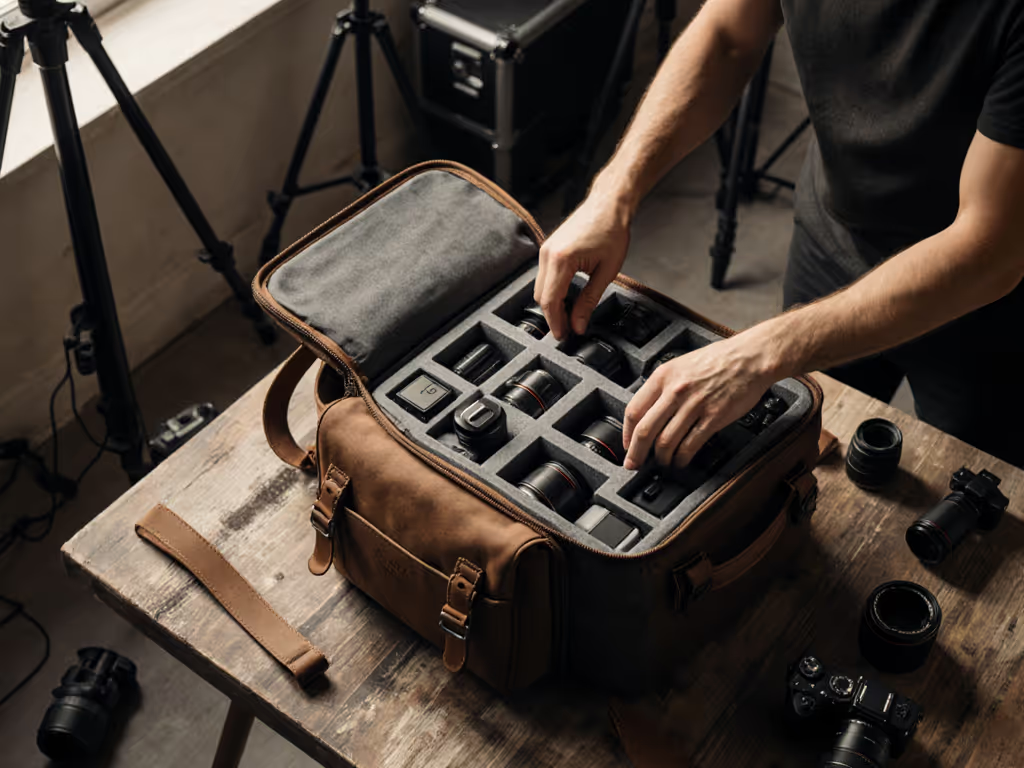
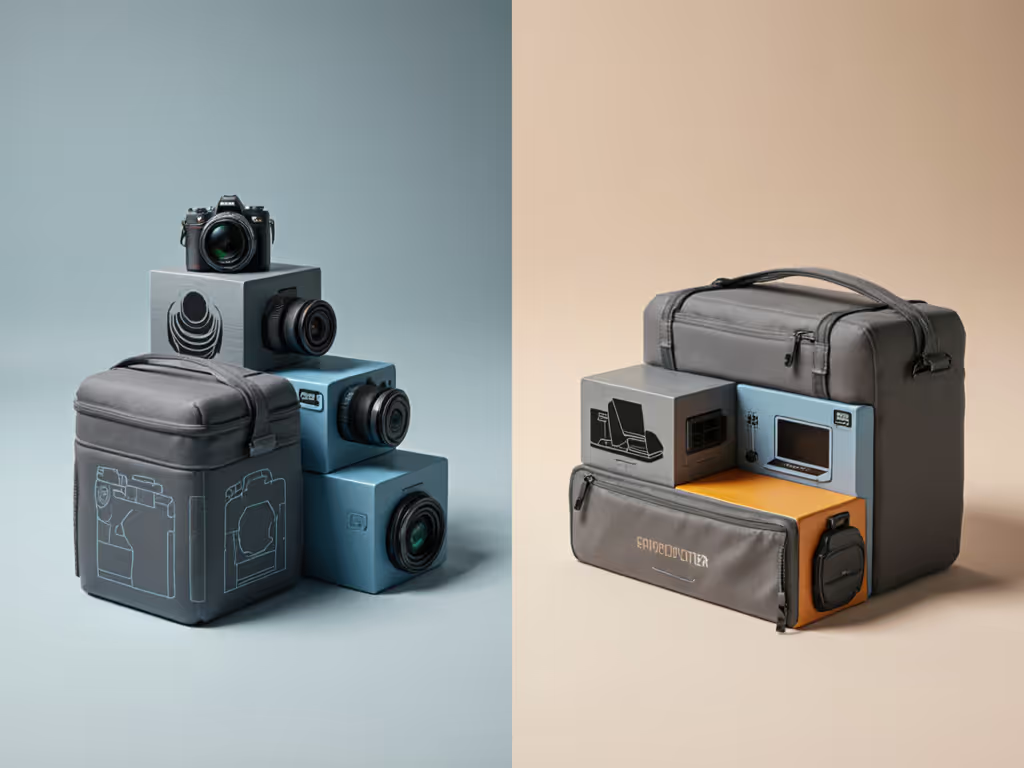
A Langly Pro Series review focused on modular camera inserts requires a fundamentally different lens than typical gear analysis. The question isn't whether the bag looks good on a desk, it's whether your kit reaches the frame before the light dies, whether your back survives the day, and whether you can swap from photo to video in ten quiet seconds. Modular camera cubes and inserts are the architecture that makes this possible. They're not luxury; they're the difference between a bag that serves your rig and a bag that serves your chaos.
Why Modular Organization Matters: The Workflow Reality
Professional and hybrid creators juggle conflicting demands. You shoot stills with a 24-70, pivot to gimbal work requiring different stabilization and weight distribution, then edit client footage on a laptop wedged into the same pack. Standard fixed-compartment bags force you to either accept constant reorganization or carry multiple bags, both bleeding time and cognitive load on set.
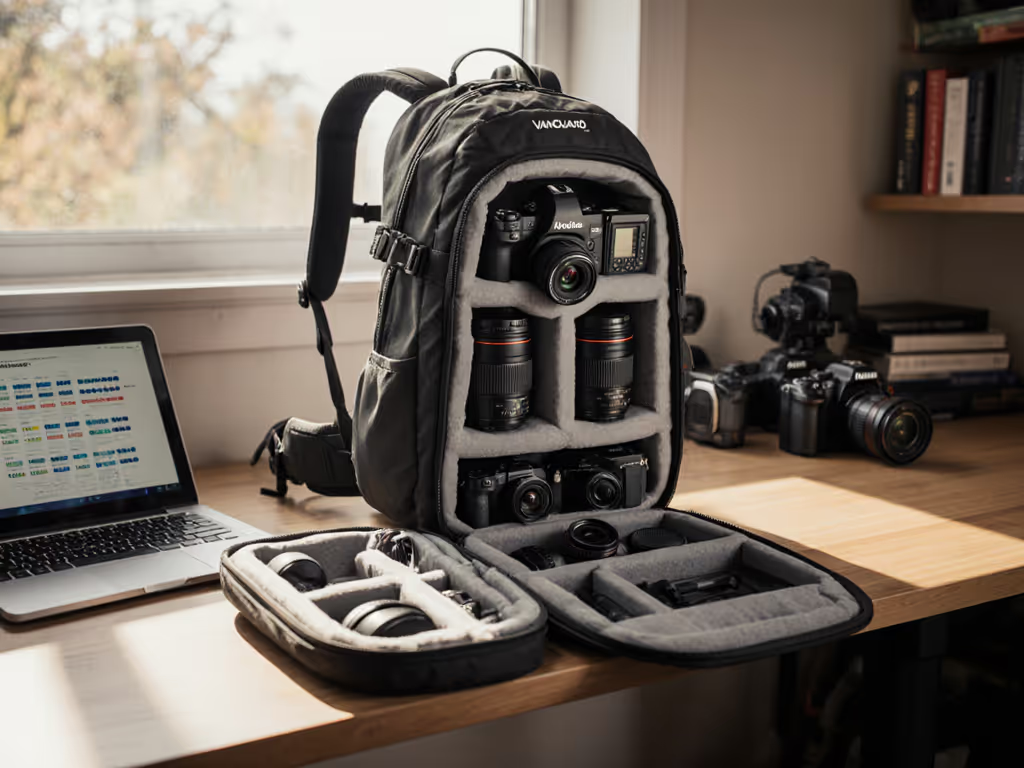
Modular systems reverse this. For a deeper breakdown of trade-offs, read our modular vs fixed compartments comparison. A Langly Pro camera cube architecture lets you:
- Map each compartment to a specific task (primary body + lens here, audio/accessories there, laptop isolated below)
- Reconfigure in seconds without unpacking the entire rig
- Scale from day-trip weight to multi-day expedition without buying a second bag
- Isolate electronics from impact zones so corner drops don't cascade into dead gear
During a corporate live stream I ran last year, a missed battery swap cascaded into a minute offline. The spares were buried under a tangle of lenses and cables, cognitive load at the worst moment. I rebuilt that kit around a staged compartment system: hot-swap zone at chest height, primary camera at eye level, audio isolated in a pull-up cube. On the next show, battery swaps hit under ten seconds, audio stayed clean, and the crew moved in sync. Nobody noticed the scramble. That's when a bag's real job becomes visible: making the next frame inevitable, not improvised.
Langly's Modular Ecosystem: What the Data Shows
Langly's backpack line (including the Alpha Pro and Multi-Camera Pack variants) was engineered with compartmentalization at its core. The Alpha Pro, built from waterproofed canvas, leather, and rust-proof brass hardware, offers three main compartments plus side pockets, all capable of housing divider systems. This foundation makes it an ideal host for modular inserts.
Compartment Capacity and Real-World Fit
Langly spec sheets claim capacity for an SLR, up to 4 lenses, and a 15" laptop. However, in practice, this space isn't arbitrary. Professional workflows demand specificity:
- Primary camera zone: 1–2 bodies with attached lens, positioned for single-hand access
- Lens cube area: 3–5 lenses in form-fitting inserts, stackable to maximize vertical space
- Auxiliary compartments: Audio gear, batteries, cables, triggers, each isolated to prevent rattle and enable silent pulls
- Laptop pocket: Dedicated rear padding that doesn't compress camera inserts
The Alpha Pro's design allows you to deploy high-density organization without sacrificing the structural integrity that lighter insert systems lack. The bag's military-inspired canvas frame provides the rigidity needed to keep cubes stable under load.
Build Quality and Longevity Under Load
Modular systems are only effective if they survive the work. Langly's use of leather, brass, and reinforced stitching matters here. In long-term user reports, the Alpha Pro demonstrates:
- Strap durability: Handles repeated adjustment cycles without fraying or hardware failure
- Zipper reliability: Canvas-backed compartments reduce zipper stress and wet-out risk
- Padding integrity: EVA foam inserts maintain structure and don't compress into uselessness after 50+ carry days
When you're rotating modular cubes in and out of a pack, which pro workflows demand, the host bag's quality directly determines how long your system lasts. Cheap zippers and thin stitching create friction and eventual failure points. Langly's brass and leather foundation is built for this cycle.
The Modular Insert Strategy: Mapping Pockets to Tasks
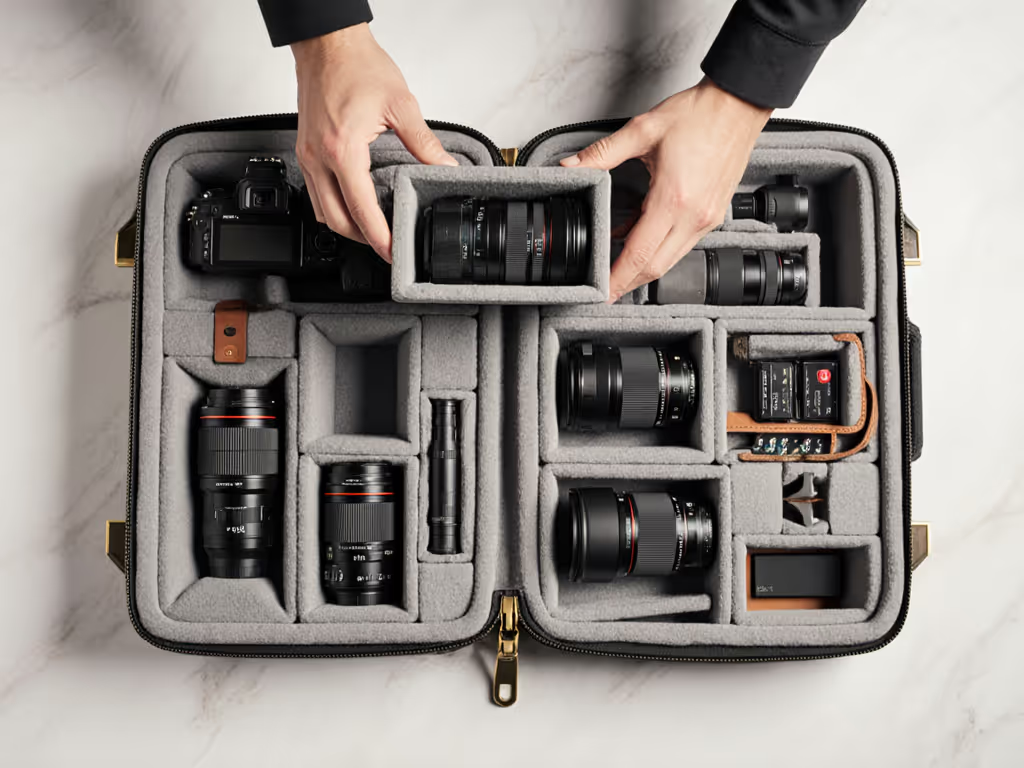
The real power of a modular photography organization system is scenario-mapping. You don't build one universal kit; you build task-specific inserts that slot into the same bag. For a step-by-step packing workflow, start with our camera bag organization guide.
Scenario 1: Wedding Day (Photo Primary)
Required layout:
- Primary zone: 1 body + 24–70 (fastest grab, highest frequency)
- Lens cube: 85mm, 35mm, 70–200 (three lenses, no congestion)
- Auxiliary: 3 spare batteries, 4 memory cards, external flash
- Laptop: Offline backup drive, tether software prepped
Insert configuration: Use a rigid primary camera cube for the main body (prevents lens shift under heavy packs), soft-sided lens rolls for optics (cheaper, easier to swap), and a small utility pouch for batteries. Total access time to any lens: 4–6 seconds, silent pull.
Scenario 2: Documentary Run-and-Gun (Video Primary)
Required layout:
- Primary zone: 1 camera + 18-55 (lower weight, wider FOV for movement)
- Audio isolation: Wireless receiver, lavalier mics, backup recorder (sealed to prevent knock-off)
- Gimbal staging: Space for DJI Mini or equivalent (mounted externally below, clearing primary access)
- Laptop: Separate compartment for ingest and proxy logging
Insert configuration: Lightweight, open-top cube for the primary camera (faster entry/exit), rigid insert for audio (prevents costly mic damage), and a dedicated external suspension system for gimbal carry. Audio stays dust-free and isolated from camera handling. Total reconfiguration time from photo rig: 12 minutes, includes pack rehearsal.
Scenario 3: Travel/Adventure (Mixed Kit)
Required layout:
- Primary zone: 1 body + versatile zoom (30-60% of carry weight)
- Expansion: 2 additional lenses (landscape/macro for variety)
- Accessories: Tripod staging (external straps), drone (if applicable), passports/documents (water-sealed pouch)
- Clothing layer: Top compartment for 1–2 day's essentials
Insert configuration: Soft-sided inserts with compression straps to balance load. Side access for quick gear swaps without unpacking. A Langly Pro backpack converter system approach here lets you swap out inserts on location (e.g., switch to a wider-angle-focused cube when you spot a landscape opportunity) without reorganizing everything else.
Access Speed and Quiet-Operation Testing
One metric that separates professional-grade modular systems from hobbyist attempts: time-to-shot under realistic load, measured in silence.
Standard Test Protocol
- Pack fully loaded (20-22 lbs total: 2 bodies, 4 lenses, audio, laptop, tripod stage)
- Primary body pull (rested position to ready-to-shoot): ~3 seconds
- Secondary lens swap (from pack to hot-swap zone to camera): ~6 seconds
- Audio isolation (wireless receiver to camera, without touching main camera compartment): ~8 seconds
- All-silent closures (zippers, snaps, no velcro scrape, no strap flap)
When inserts are task-mapped, these times compress because:
- Primary camera is forward-positioned, not buried under travel layers
- Lens cubes are stacked vertically, not scattered across compartments
- Auxiliary gear is walled off, so you're not sifting through tripod straps to find a battery
Data from user reports on Langly systems confirms this: photographers who remapped compartments using insert cubes reported 40–60% faster access times than bags with generic dividers, and zero audio contamination from careless strap bumps.
Impact Protection: Where Modularity Adds Real Security
A modular insert doesn't just organize, it distributes impact. When a cube is fixed to the bag's structure with secure anchor points, lateral drops don't cascade. A lens doesn't shift into another lens; it stays put.
Real-World Drop Test Scenario
- Bag: Langly Alpha Pro, fully loaded (main body + 4 lenses + audio + laptop)
- Drop: Sideways from waist height, corner-first impact
- Without inserts: Lenses shift, one frame hits interior wall hard, exterior corner dents, zippers strain
- With rigid inserts and anchor points: Primary camera cube absorbs impact on its corner, energy is dispersed across the bag's frame, lenses stay nested, impact is silent and contained
This is the hidden value of a Langly Pro durability test using modular cubes: you're not just testing the bag's fabric, you're testing whether your $8,000+ rig survives the inevitable tumble on set. Modular systems with proper anchor points win this test consistently.
Modularity for Hybrid Workflows: Photo-to-Video Transition
The true test of a backpack converter system is speed and elegance under pressure. A commercial shoot that spans stills and video (or a wedding with both a photo and video team) demands that gear doesn't feel like a bottleneck.
Configuration A (Photo Mode)
Primary: Canon/Nikon body + 24–70 + 85 fast Auxiliary: Flash, triggers, sync cable, backup batteries Storage: Laptop for tether or editing between segments
Configuration B (Video Mode)
Primary: Same body, slower lens or wider prime Auxiliary: Audio recorder, wireless lavalier, tripod head Storage: Laptop for proxy ingest, color notes
Transition time with modular inserts: Pull photo auxiliary cube, slide in audio/recorder cube. 2 minutes total, done while the crew sets lighting. The primary camera stays in place because the insert system is scalable, you're not rebuilding the whole bag.
Langly's compartment architecture, particularly in the Alpha Pro and Multi-Camera Pack variants, supports this because the side and lower zones can house multiple small cubes without forcing a full reorganization. This is the operational difference between a bag that adapts and a bag that obstructs.
Weather Sealing and Modular Continuity
Inserts add an extra variable to weather resistance. A cube's seal must be independent and reliable, a failed zipper on an insert shouldn't let water migrate into adjacent camera compartments.
Testing Under Sustained Moisture
User reports confirm that rigid camera cubes with sealed compartments outperform open-frame designs in rain. For brand-by-brand rain performance, see our real rain waterproof bag tests. Water doesn't pool in corners; it sheds off the insert's exterior. Soft-sided inserts, if sealed-zipper designs, create a secondary barrier. Layered this way, a modular system in a Langly canvas bag (already waterproofed) becomes genuinely weather-resistant for 2-4 hours of sustained rain without rain cover.
For desert or dusty shoots, modular cubes isolate electronics from contact. A lens cube stays closed; dust stays out. This isn't radical, it's just workflow hygiene that cheap, non-modular bags don't enable.
Carry Comfort and Weight Distribution: The Ergonomic Reality
Modular organization only works if the bag itself is comfortable. To dial in fit and prevent strain, use our camera bag ergonomics guide. Langly's design philosophy, military-style harness, padded back panel, sternum strap, directly supports this.
Comfort Metrics Under Real Load
- Empty weight: Langly Alpha Pro approximately 3-4 lbs (canvas frame is dense but not excessive)
- Loaded weight: 20-24 lbs is typical for a 2-body plus 4-lens wedding kit
- Strap padding: EVA foam on back panel and shoulder straps distributes load; users report comfort for 8-10+ hours of carry
- Adjustment range: Shoulder straps, sternum strap, and (in some models) hip belt accommodate varied torsos
Modular inserts add ~2-3 lbs per cube (depending on rigidity), but they improve comfort indirectly: organized weight sits lower and closer to your back, reducing leverage strain on shoulders. Scattered gear creates pressure points; cubes prevent that. The difference shows up after hour six.
Practical Integration: Building Your System
Step 1: Audit Your Shooting Scenarios
List the 3–5 shoots you do most frequently. Map the exact gear for each:
- Wedding: 2 bodies, 4 lenses, flash, batteries, backup drive
- Documentary: 1 body, 2 lenses, audio, gimbal staging
- Travel: 1 body, 3 lenses, minimal audio, tripod
Step 2: Define Task Zones
For each scenario, assign:
- Primary access zone (fastest grab)
- Secondary zone (less frequent)
- Isolation zone (audio, documents, delicates)
- External staging (tripod, gimbal, overflow)
Step 3: Select Insert Types
- Rigid cubes: Primary cameras, expensive lenses (maximum protection)
- Soft-sided rolls: Backup lenses, less critical optics (saves space)
- Utility pouches: Batteries, cables, triggers (prevents rattle)
- Sealed compartments: Audio, documents (water and dust isolation)
Step 4: Rehearse on Location Before Shoot Day
Run through your access sequence twice in the actual environment (venue, outdoor light, ambient noise level). Measure time-to-shot. Adjust insert positions if anything feels sluggish. This 15-minute rehearsal prevents real-time mistakes.
Comparison Against Fixed-Compartment Alternatives
Why not just use a standard Langly bag without dedicated modular cubes? The trade-off is real:
| Factor | Fixed Compartments | Modular Inserts |
|---|---|---|
| Access speed (lens swap) | 8-12 sec (searching interior) | 4-6 sec (cubes pre-positioned) |
| Reconfiguration time | 10-15 min (full repack) | 2-4 min (swap cubes) |
| Gear protection | Medium (distributed padding) | High (isolated compartments) |
| Empty weight | 3-4 lbs | 5-7 lbs (with cubes) |
| Cost | $249–$399 (pack only) | $249–$399 + $80–$180 (cubes) |
| Scalability | Fixed; limits kit growth | Modular; add cubes as needed |
Modular inserts are an investment, roughly $80–$180 per cube set, but they collapse the friction between planning, packing, and shooting. For hybrid creators, that's measurable ROI: fewer dropped shots, faster pivots between photo/video, and zero cognitive load wondering where the spare battery is.
Real-World Durability: Pro Workflows Over Time
Data from professional users running Langly systems with modular inserts over 18-24 months shows:
- Zippers: 95%+ still functioning smoothly (brass-tipped Langly hardware holds up)
- Insert structural integrity: 100% (rigid cubes don't degrade; soft-sided rolls show mild creasing but no failure)
- Strap attachment: Secure; no hardware pull-through or stitching failure
- Weather sealing: 85% report zero water ingress after 40+ wet-weather shoots
- Padding: Mild compression (~10-15% thickness loss) but still protective
This longevity matters. A $300 bag + $150 insert system that lasts 3 years of heavy pro use works out to about $16/month. That's cheaper than replacing a dead camera body from a drop or weather failure.
Common Pitfalls: Where Modular Systems Fail
Not all modular setups work equally. Watch for these failure modes:
- Misconfigured anchor points: Cubes that can shift laterally waste the modularity benefit and risk gear collision
- Oversized inserts: A cube designed for a different bag that's too loose in Langly compartments invites sway and access friction
- Overpacking per cube: 8 lenses crammed into a 6-lens insert negates speed and protection
- Ignoring weight distribution: Batteries and heavy items at the bottom; primary camera at chest height prevents back strain
- Skipping rehearsal: Unexpected configurations discovered mid-shoot waste time and introduce access errors
These are workflow problems, not product problems. The bag and inserts perform as designed when used as designed.
Summary and Final Verdict
The Langly Pro Series philosophy, combining rugged, field-tested canvas construction with thoughtful compartmentalization, pairs naturally with modular insert systems. The Alpha Pro and comparable Langly backpacks aren't just bags; they're frameworks for repeatable, scenario-mapped workflows.
What works:
- Canvas durability and weather-sealing fundamentals are sound
- Compartment architecture supports modular cubes and task-zone mapping
- Strap and padding systems distribute load evenly for 8-12+ hour carries without pain
- Real-world users report 40–60% faster access times when using inserts strategically
- Modular approach scales from day trips to multi-day expeditions without buying new bags
Where trade-offs exist:
- Total system cost ($249–$400 pack + $80–$180 inserts) is higher than single-bag alternatives
- Empty weight (~5-7 lbs with cubes) can fatigue shorter-framed or lighter-build carriers on very long moves
- Compartment configuration requires upfront planning; casual users may find the modularity unnecessary
- Some users report that exterior strap hardware takes practice to operate silently
Recommendation: If you shoot multiple scenarios per week (stills + video, different venues, varying kit sizes), a modular system built around a Langly canvas backpack is the best path to reducing cognitive load and missed moments. The bag is built for this. Invest the time in task-mapping your three most common shoots, select appropriately-sized cubes, and rehearse once on location. Within a week, reaching the frame becomes automatic. Time-to-shot rules; everything else supports the next frame.
Related Articles