Urban Night Photography Bags: Stealthy & Secure Comparisons
By Avery Sullivan • 13th Jan
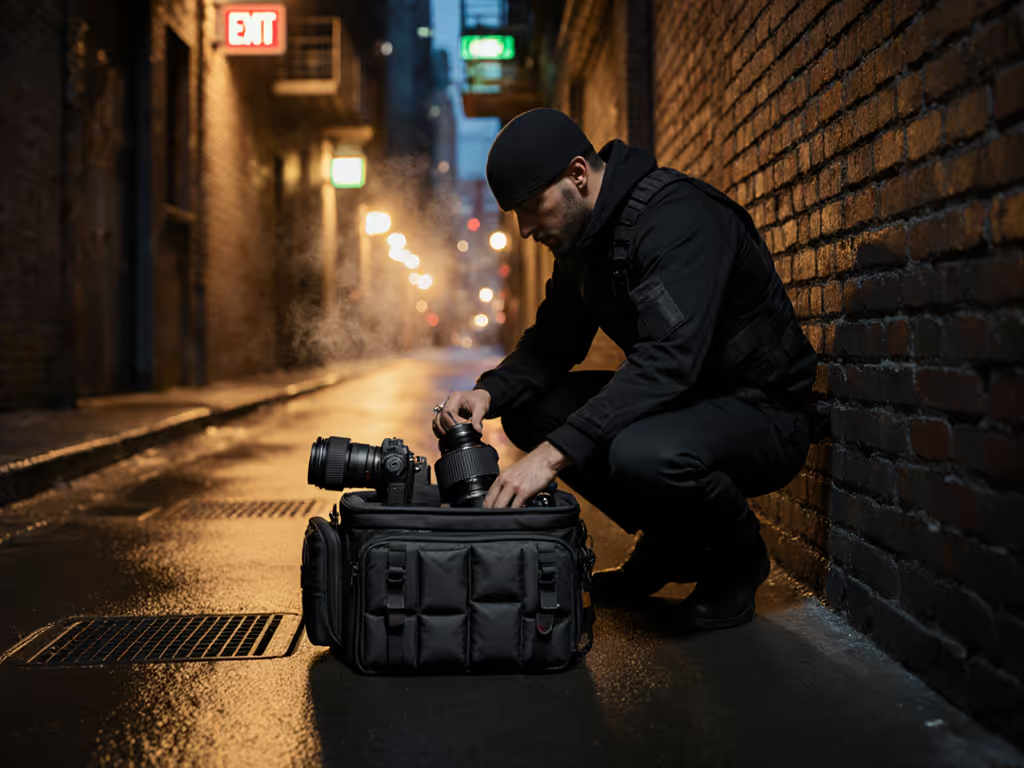
If your urban night photography bags feel like a liability instead of a tool when streetlights flicker and shadows deepen, you're not alone. The right city night photography cases quietly solve three silent killers of night shoots: covert security, frictionless access, and gear that stays organized in near-darkness. Forget glossy marketing fluff, let's cut through the noise with a practical framework built for real streets.
Introduction: Why Night Changes Everything
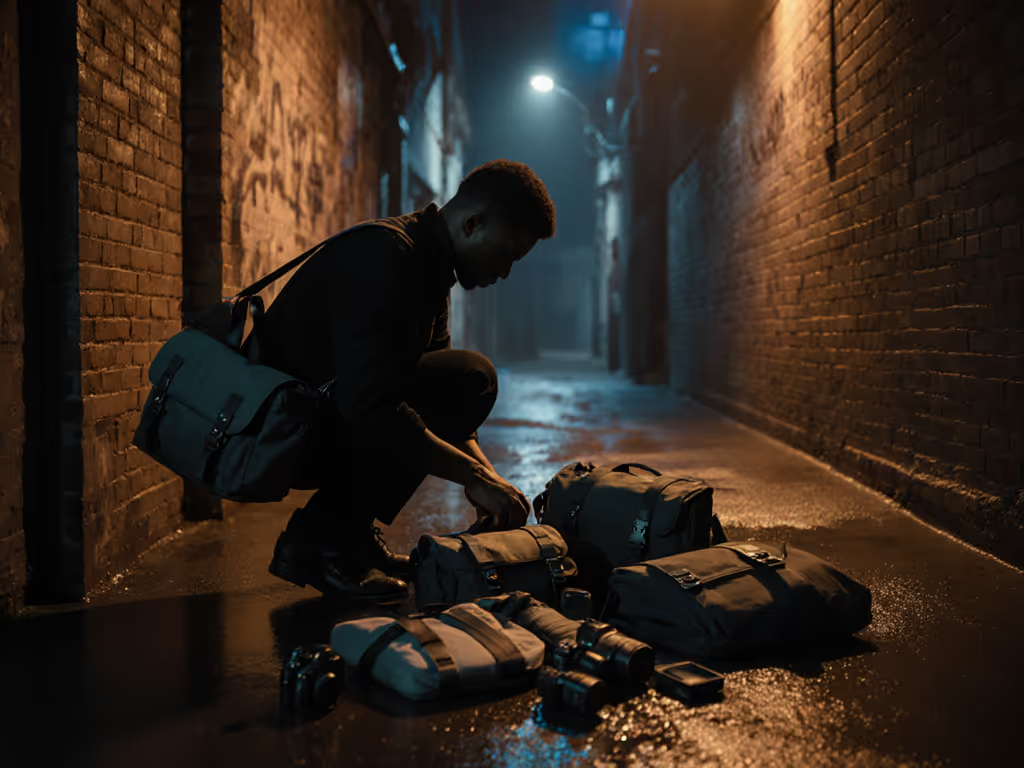
Daylight camera bags often fail catastrophically after dark. For a data-backed breakdown of stealth and security, see our anti-theft camera bag tests. That reflective logo? A theft beacon. Loud zipper screeches? Ruins audio for hybrid creators. Clumsy tripod mounts? Costs precious seconds chasing fleeting light. I've been there, my first "pro" bag had 20 pockets but zero plan. Batteries vanished mid-shoot; I doubled gear just to stay functional. Only when I committed to modular simplicity did my gear become invisible to the workflow. As street night photography gear demands evolve, low-light shooting organization must prioritize stealth, speed, and absolute reliability. This isn't about more bags, it's about right-fit systems that grow with you.
The Night Photographer's Decision Gate: Your Essential Framework
Stop comparing liter counts or color swatches. Start with these three filters: your decision gate for night-ready bags:
- Can it hide in plain sight? (No logos, muted tones, unobtrusive shapes)
- Will it deliver gear in 3 seconds or less? (Silent, tactile access without light)
- Does it secure gear against jostling and judgment? (Impact protection + client-appropriate aesthetics)
Fail any one, and you're gambling with shots. Pass all three, and you gain confidence to shoot, even when nerves flare.
FAQ Deep Dive: Solving Your Night-Specific Pain Points
Q1: "How do I avoid looking like a 'camera bag target' during night shoots?"
The real issue: Conspicuous branding or bulbous shapes scream "rob me!" in dimly lit areas. Stealth isn't optional, it's survival. Look for:
- Muted, non-reflective fabrics (think charcoal, olive, or matte black Cordura)
- Zero exterior branding or subtle, non-photographic logos
- Sleek silhouettes that blend with commuter backpacks or messenger bags
Example: A billingham-style messenger in oil-tanned canvas looks like a vintage briefcase, not a gear hauler. Test this by walking your bag through a mall after dark. If strangers glance twice, it's too visible.
Q2: "Why do most bags slow me down when I need speed?"
The root cause: Day-focused designs prioritize storage over action. Night requires discreet night camera bags engineered for tactile operation. Not sure which style suits your pace? Our sling vs backpack speed test measures access time and comfort in real street scenarios. Prioritize:
- Magnetic or silent-zip side access (no fumbling with buckles)
- Tactile dividers (raised edges you feel in darkness)
- Hip-belt pockets for batteries/cards (no bending)
Decision tree: Speed vs. Security
Need instant camera grab? → Sling bag or messenger with one-hand access

Shooting for 4+ hours? → Backpack with silent side panel + chest strap

Hybrid (photo + audio)? → Modular cube system inside neutral outer bag
Q3: "How do I protect gear from bumps AND keep it client-ready?"
The hidden conflict: Heavy padding slows access; minimal padding risks gear in crowds. Security for night photography means smart protection:
- Rigid base plates (absorbs curb drops when sprinting)
- Shock-absorbing corner guards (disguised as exterior pockets)
- Dedicated RF-shielded pockets (for passports/credit cards during travel)
Pro tip: Stuff soft gear (lenses, filters) inside your camera body. Less empty space = less gear movement during sudden stops.
Q4: "Can small-framed shooters find comfortable night bags?"
Yes, but standard sizing fails. Most brands ignore torso length. Fix this by:
- Ignoring "unisex" claims: demand adjustable sternum straps (min. 4" range)
- Testing hip belts on your waistline (not hips, belts must sit on pelvic bones)
- Choosing harnesses with 360° rotation (prevents strap slippage on narrow shoulders)
Real-world fix: Brands like Peak Design and Shimoda offer S/M/L harness kits. Buy the kit, it's cheaper than replacing the whole bag when straps dig in. For a deeper dive on harness fit and load distribution, see our camera bag ergonomics guide.
Q5: "How do I organize without Velcro noise contaminating audio?"
Critical for hybrid creators. Replace noisy closures with:
- Elastic loop holders (for lenses/batteries)
- Silicone-grip dividers (stay put without sound)
- Hidden flap pockets (for memory cards)
My rule: If you can hear it at all when moving, it's too loud for run-and-gun audio. Test bags in a quiet room with a recorder.
Q6: "What's the ONE upgrade that transforms night reliability?"
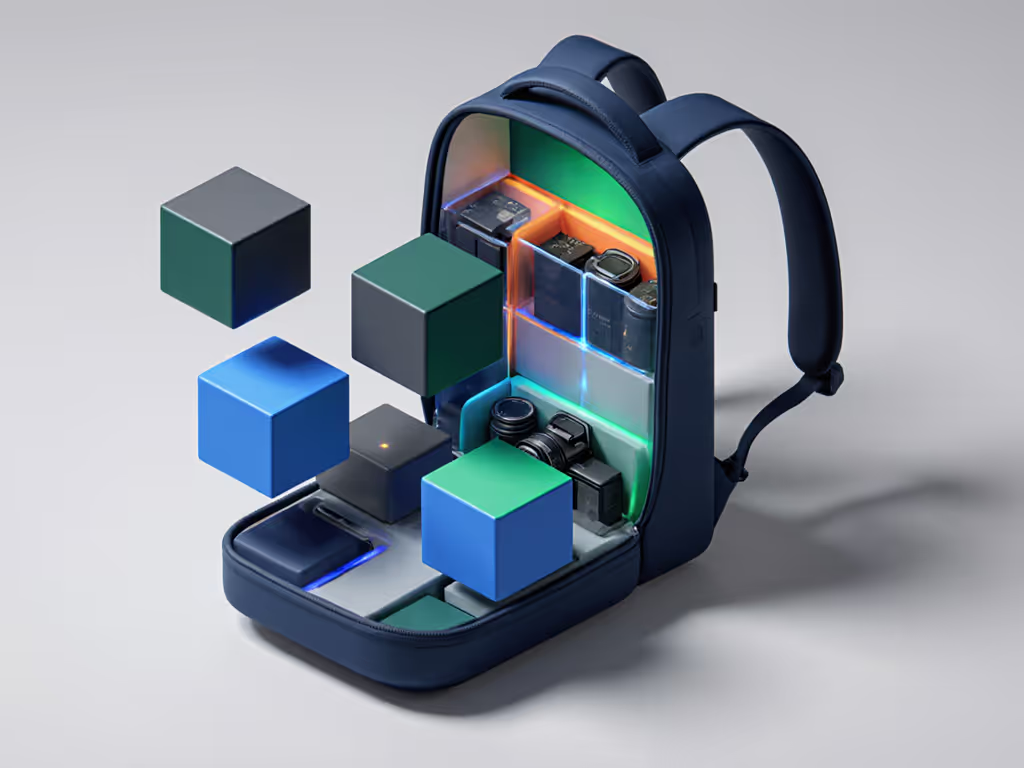
Modular cubes. Not the flimsy freebie kind: dedicated cubes that:
- Fit your bag's dimensions exactly (no wasted space)
- Have tactile IDs (e.g., rubber dots for lens cubes, smooth for battery)
- Slide in/out silently (no zipper drag)
Start with a single cube for your core kit (body + 24-70mm + batteries). Add a second cube only when you consistently need more. This avoids the "bag graveyard" of unused compartments. As my experience taught me: Start small, fit right, build the system methodically.
Why Modularity Beats Monolithic Bags (Every Time)
That $300 "all-in-one" backpack often forces compromise: bulky when light, cramped when heavy. To choose the right internal layout for your system, compare modular vs fixed compartments. Urban night photography bags should scale with your needs. My go-to solution:
- Base layer: Slim backpack (20-25L) for essentials + laptop
- Add-on: Mini sling (holds 1 body + prime lens)
- Swap cubes based on shoot type (video/audio/long lens)
This two-bag system cut my gear doubling by 70%. No more "just in case" lenses slowing me down. When you know exactly where everything lives (even blindfolded), you shoot faster and calmer.
The Final Checklist: Your Night-Ready Verification
Before buying, run this 60-second test:
- Darkness trial: Load the bag, then turn off lights. Grab your camera in <5 seconds.
- Stealth scan: Walk it through a dimly lit parking garage. Does it draw attention? If weather is your wildcard, compare real-world rain performance in our waterproof camera bag tests.
- Sprint test: Jog 50 feet. Does gear shift? Do straps stay put?
- Client check: Would it look out of place in a gallery opening?
If any fail, walk away. Your city night photography cases must earn their place in your workflow, not disrupt it.
Conclusion: Pack Light, Shoot Bold
The best urban night photography bags disappear into your process so the shot becomes your focus, not the gear. They're not purchased; they're curated through deliberate, small upgrades. Build your system around what actually happens after dark: the chill of concrete underfoot, the urgency of vanishing light, the weight of a missed opportunity. When your bag stops being a problem and becomes part of your rhythm, that's when magic happens. You'll move through the night with confidence to shoot, knowing every piece has earned its place.
Related Articles