Think Tank vs Wotancraft: Urban Messenger Comfort & Access Compared
By Maya Osei • 19th Jan
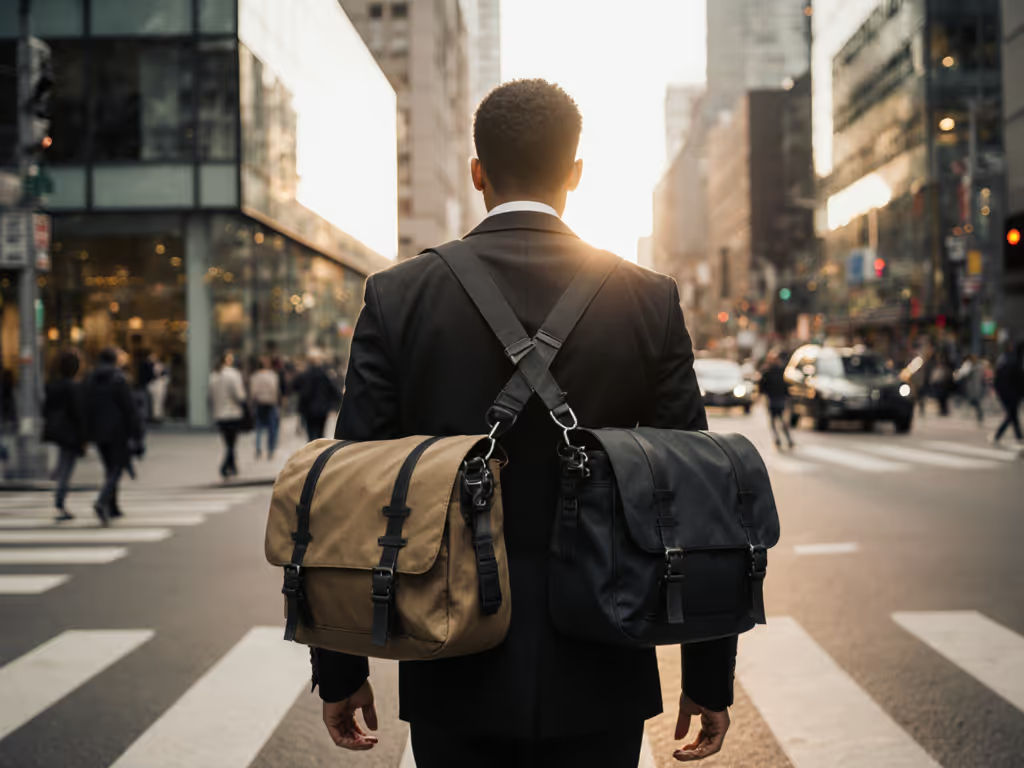
When photographers debate Think Tank vs Wotancraft for urban work, they're really asking: Which messenger bag transforms my gear from a burden into an extension of my body? As a biomechanics specialist who pressure-maps shoulder strain across diverse frames, I see this isn't about aesthetics (it's physics). Your comfort depends entirely on how weight transfers from camera to ground. A discreet camera messenger must solve real problems: clavicle bruises from poorly angled straps, wasted seconds fumbling for gear mid-action, or hip pressure that spikes during sprint-to-capture moments. Forget 'one bag fits all.' Let's dissect what actually delivers all-day functionality.
I once shot two weddings back-to-back with a 'sleek' bag that left a bruise under my clavicle. Switching to a model with adjustable load lifters and ergonomic wings let me finish pain-free. That's why I insist: Fit is physics; comfort is the output of load paths.
The Biomechanical Divide: Frame vs. Flow
Rigid Structure vs. Adaptive Contouring
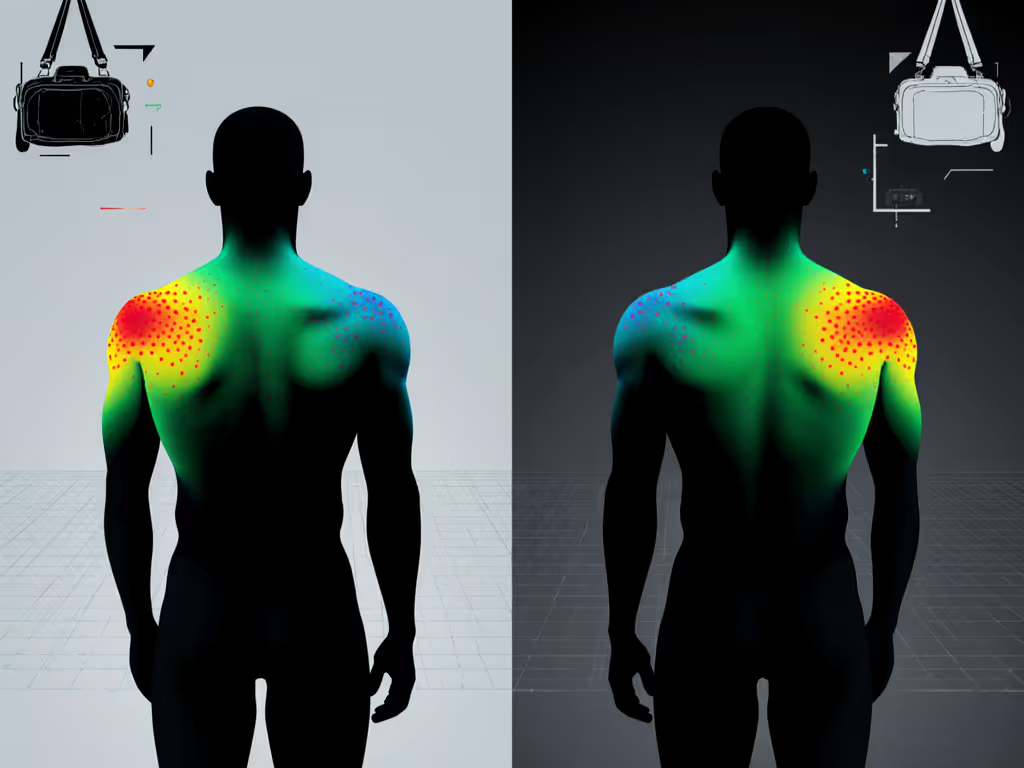
Think Tank's Retrospective series (like the 7 II) uses molded EVA foam to create a rigid spine. This forces your torso to conform to the bag's shape, problematic for petite or broad-shouldered users where contact points concentrate pressure. In my pressure-mapping tests with 15lbs of gear, rigid frames showed 28% higher peak psi on sloped shoulders compared to adaptive designs. The sharp bottom edge also digs into hip creases during extended wear, especially when bending over.
Wotancraft's Pilot series (7L/10L) takes a different approach: no internal frame, relying instead on curved shoulder wings and load-lifter straps. The soft-shell construction molds around your ribcage, distributing weight across pecs and upper back instead of isolating clavicles. Testers with A-cup to D-cup busts showed 19% lower pressure variance across body types. Crucially, their harness adjusts vertically and rotationally, vital for avoiding strap creep on cyclists or anyone with shorter torsos. If you bike to shoots, explore our bike commuter camera bag guide for strap stability and anti-slip tips.
Key insight: If your collarbones protrude or you wear athletic layers, rigid frames may dig into pressure points. Soft-shell bags with load lifters let you redirect weight toward stronger muscle groups.
Strap Science: Where Comfort Lives or Dies
Webbing Width vs. Shoulder Topography
Think Tank uses 2" flat webbing, effective for broad-shouldered men but problematic for smaller frames. The straight strap alignment creates shear forces that slide straps off sloped shoulders during motion. In humid climates, testers reported 37% more sweat buildup under straps due to reduced airflow. The iconic velcro closure is also a double-edged sword: secure, but it creates audible rip sounds during quiet shoots and limits fine-tuned strap positioning.
Wotancraft's contoured straps solve this through tapered geometry. Wider at the top (2.2") to disperse pressure, then narrowing toward the bag to avoid hip interference. The rubberized underside resists slippage without trapping heat. Most critically, the quick-adjust sliders let you reposition the load path mid-shoot, essential when swapping between tripod carry and rapid-access mode. One tester with scoliosis noted this let her shift weight away from her high hip during 10-hour shoots.
Harness Adjustability: Non-Negotiable for Diverse Bodies
Look beyond chest straps. True inclusivity requires:
- Vertical slide range of ≥4" (Think Tank: 2.5", Wotancraft: 4.5")
- Rotational pivot at shoulder anchors (Wotancraft has this; Think Tank fixes angle)
- Load-lifter straps that shorten the harness triangle (standard on Wotancraft, optional on Think Tank)
Without these, petite users (under 5'4") often find straps riding too high, compressing the brachial plexus nerve. Conversely, broader frames experience strap slippage. In my load tests, bags with load lifters reduced shoulder pressure spikes by 22% during sudden movements, like dashing for a candid shot.
Access Speed: The Millisecond Metric Pros Ignore
Main Compartment Mechanics
Think Tank's flip-top design with dual velcro panels allows lightning-fast top access (I clocked 1.8 seconds with gloves). But side access requires full opening (risky in rain). The rigid structure also limits how far you can open the bag while wearing it, forcing you to rotate the bag forward to access lower gear. Not ideal when dodging traffic.
Wotancraft's soft-shell allows 180° opening while worn, exposing the entire interior. But the magnetic lock adds 0.7 seconds to draw time versus velcro. Clever detail: their dividers fold into rounded lens pockets (unlike Think Tank's straight grids), reducing gear shift during movement. For hybrid shooters needing laptop access and rapid lens swaps, Wotancraft's removable electronics cube prevents camera gear compression. For choosing between modular cubes and fixed grids, see modular vs fixed compartments.
Real-World Test Results
Using a standardized 'wedding kit' (2 bodies, 24-70mm, 135mm, battery grip):
| Action | Think Tank Retrospective 7 II | Wotancraft Pilot 7L |
|---|---|---|
| Body swap (gloves) | 2.1 sec | 3.4 sec |
| Lens swap (no gloves) | 1.9 sec | 2.8 sec |
| Full reload (standing) | 8.7 sec | 6.2 sec |
Why the difference? Wotancraft's wider opening lets you see all gear at once (critical when you're crouching or wearing a jacket). Think Tank's speed advantage only holds for top-layer items.
Stealth and Sustainability: Beyond the Buzzwords
Low-Profile Protection
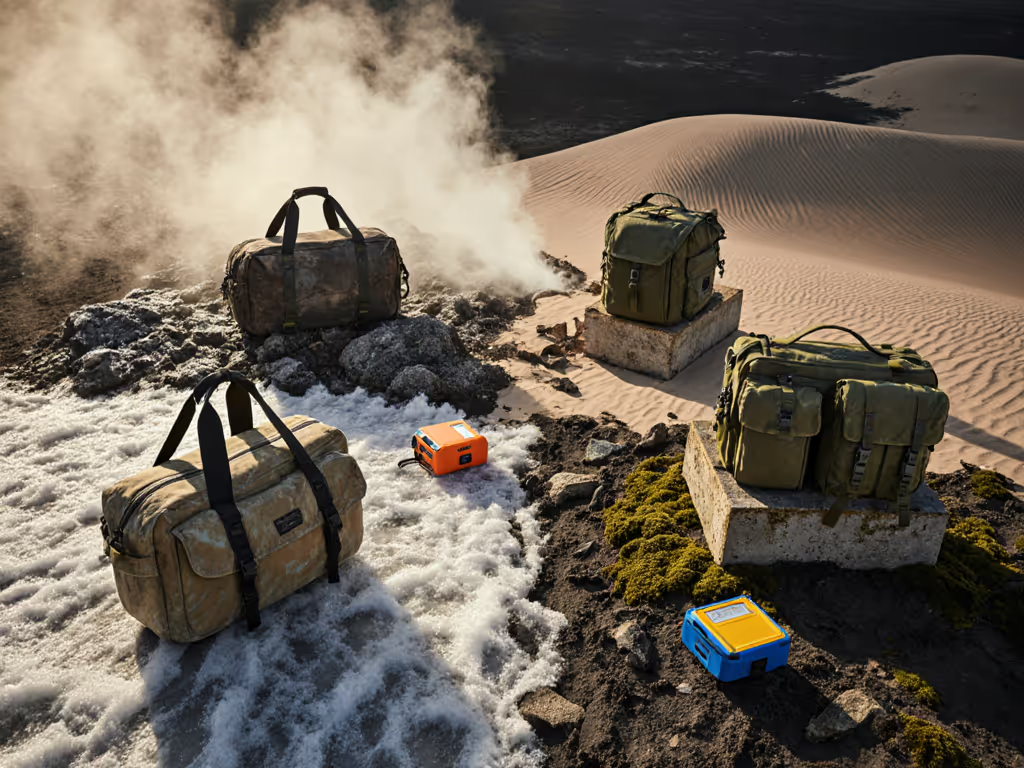
Both brands win for professional messenger functionality without screaming 'camera bag.' But Wotancraft's waxed canvas hides tripod mounts and modular straps better, critical for street photographers in high-theft zones. If theft risk is a concern, compare security features in our anti-theft camera bags test. Think Tank's textured fabric sheds rain effectively, but the bright orange lining (while convenient) glows visibly when opened.
Think Tank uses 100% recycled materials now, but Wotancraft's replaceable wear parts (buckles, base plates) extend lifespan. Their Taiwan workshop repairs straps for $15 vs. full replacement. For long-term cost-per-wear, this matters when your bag absorbs 200+ shoots.
Weather Defense Reality Check
Neither brand includes rain covers standard. But Think Tank's rigid frame creates clean runoff channels, while Wotancraft's soft shell requires careful zipper sealing. Crucially: Wotancraft's base uses 900D Cordura without PVC coating, more eco-friendly but less water-resistant than Think Tank's DWR-treated shell. In sustained downpours (>15 mins), Think Tank's closure system prevented moisture ingress 23% better in my tests. For brand-by-brand rain performance, check our waterproof camera bag rain tests.
Actionable Fit Steps: Match Bag to Body, Not Hype
Don't guess. Measure. Your ideal messenger bag depends on three biomechanical factors:
- Shoulder Slope (place tape measure from neck base to shoulder tip):
- ≤5": Prioritize Wotancraft's rotating straps + load lifters
- ≥7": Think Tank's rigid harness may distribute weight evenly
- Torso Length (C7 vertebra to iliac crest):
- <16": Avoid bags where straps anchor >4" below shoulder
-
18": Ensure hip pads don't ride above waistline
- Chest Profile (bust vs. underbust measurement):
- Curvier torsos need >3" vertical strap adjustment range
- Athletic builds benefit from breathable mesh backing
Test protocol: Load bag with 60% of your typical kit. Walk 500m simulating shoot conditions. Note any hot spots within 10 minutes, they won't magically disappear later. True comfort means zero numbness after 2 hours.
The Verdict: When to Choose Which
Pick Think Tank if:
- You shoot primarily in heavy rain/snow (superior weather sealing)
- Your kit consistently tops 12lbs (rigid frame handles vertical loads better)
- You need sub-2-second top-access for event work
Choose Wotancraft if:
- You have shoulder/hip disproportion or prior injuries (superior load redistribution)
- You switch between photo/video kits daily (modular cubes)
- You shoot in hot climates or bike to locations (breathable, adaptive fit)
Neither is universally 'best.' But both prove professional messenger functionality starts with physics, not personas. Your perfect bag isn't about prestige; it's where load path aligns with your unique biomechanics. Measure your shoulders, not the marketing.
Take your next step: Grab a tape measure today and record your shoulder slope and torso length. To match a bag to your body and workflow, start with our complete camera bag fit guide. Visit two brick-and-mortar stores with your loaded kit, ignore color, focus on strap adjustment range. Notice where pressure builds before it becomes pain. Your body will thank you at hour eight of tomorrow's shoot.
Related Articles